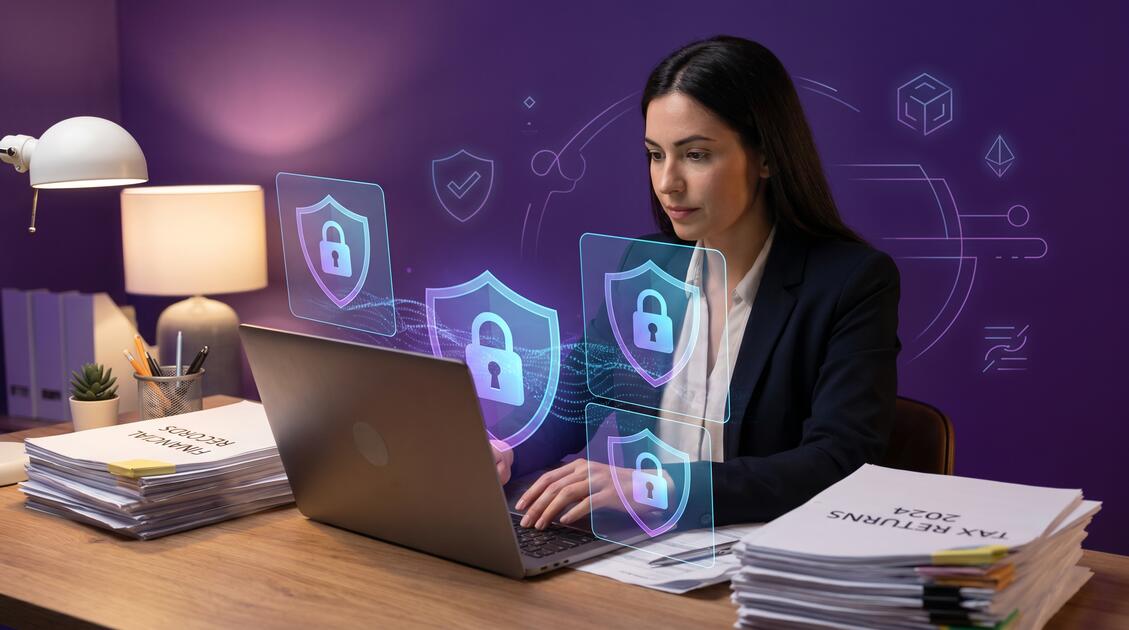
As an accountant or tax professional, you hold some of the most sensitive personal financial information in existence: tax returns, Social Security Numbers, W2s, 1099s, investment records, bank account information, and financial strategies. Your clients trust you to keep this data completely confidential. A single data breach doesn't just violate that trust—it can expose your clients to identity theft, financial fraud, and years of recovery costs while destroying your professional reputation and opening you to lawsuits.
Why Accountants & Tax Professionals Face Unique Digital Threats
Accountants and tax professionals are high-value targets for cybercriminals for one simple reason: direct access to financial identity. Unlike healthcare workers who handle medical records or lawyers who manage legal documents, accountants control the keys to someone's financial life.
You're Custodians of Financial Secrets
Every tax return you process contains details a person would never share publicly: unreported income sources, family financial conflicts, investment strategies, estate planning information, and vulnerability details that identify people for targeted fraud. A compromised tax return in the wrong hands becomes a tool for identity theft, fraudulent filing, and financial exploitation.
Cybercriminals Target You Deliberately
Unlike random phishing attacks, criminals specifically target accounting firms because they know the data value is exponentially higher. A single compromised client database of 100 tax returns isn't one data breach—it's 100 potential identity theft targets. This targeting makes you and your firm an attractive objective for sophisticated attacks.
Your Professional Obligations Are Legally Binding
You're not just morally obligated to protect client financial data—you're legally required to do so. Depending on your jurisdiction, you may be bound by accounting ethics standards, state regulations, IRS confidentiality requirements, and industry-specific laws that impose strict penalties for breaches.
Tax Return & Financial Data Security Risks
Tax returns and financial documents represent an unprecedented concentration of personal data. A single tax return contains:
- SSN (Social Security Number) — the master key to identity theft
- Income sources & amounts — targets for fraudulent claims
- Financial account numbers — used for direct theft or compromise
- Family information — children's SSNs, spouse details, dependent data
- Investment details — revealing total net worth and asset locations
- Business ownership — identifying business entities for targeting
- Property information — real estate holdings and locations
- Medical deductions — health conditions and treatment details
Each of these data points alone is valuable to a cybercriminal. Combined in a single tax return, they represent a complete financial and personal profile.
Critical: Tax Return Fraud Risk
Criminals use stolen tax returns to file fraudulent returns claiming refunds before the legitimate return is filed. By the time the real return is submitted, criminals have already claimed the refund. Victims then face months of IRS interaction to prove fraud and recover funds.
Client Confidentiality & Professional Obligations
Professional accountants have a legal duty of confidentiality that extends beyond general data protection. This is similar to attorney-client privilege or HIPAA for healthcare, but applied to financial data.
Professional Standards
Professional accounting organizations (AICPA, CPA societies) require members to maintain strict confidentiality of client information. This isn't optional—it's foundational to the profession. Breaking confidentiality violates professional ethics codes and can result in license suspension or revocation.
Legal Requirements by Jurisdiction
Many states have data protection laws requiring accountants to implement reasonable security measures. IRS Circular 230 (if you're an Enrolled Agent) includes security requirements. Some states classify financial data with the same protection standards as healthcare or legal information.
Breach Notification Obligations
When a data breach occurs, you're typically required to notify affected clients, often within specific timeframes (30-60 days depending on jurisdiction). This notification requirement extends the damage beyond the initial breach—clients discover their trust was broken, and word of breaches spreads quickly.
Cyber Attacks Targeting Financial Professionals
Cybercriminals have specific attack patterns for accounting firms because they understand the data flows and value chains.
Email Compromise & Phishing
Criminals send sophisticated phishing emails targeting accountants, disguised as IRS communications, client requests, or vendor invoices. Once they gain email access, they intercept file transfers, misdirect payments, or extract client data from email archives.
File Transfer Vulnerabilities
Email attachments and cloud file sharing (Dropbox, Google Drive, OneDrive) used to transmit tax documents are common targets. If your network connection is unencrypted, attackers can intercept files in transit. Shared links can be compromised if sent through unencrypted email.
Public WiFi Network Attacks
Accountants working from coffee shops, libraries, airports, or client offices on public WiFi are vulnerable to man-in-the-middle attacks. Criminals can intercept login credentials, tax documents, and financial data transmitted over unencrypted WiFi.
Home Network Vulnerabilities
As remote work increases, many accountants work from home where network security might be weaker than office environments. Shared home WiFi used by family members, guests, or visitors creates additional attack surfaces.
Did You Know?
Accounting and tax firms are among the most targeted sectors for ransomware attacks. Criminals encrypt firm files and demand ransom, knowing that delayed client services during tax season creates pressure to pay quickly.
Secure Data Transmission & File Sharing
Tax professionals regularly transmit sensitive files to clients and receive financial documents from clients. Each transmission is an exposure point.
Email Transmission Risks
Email is inherently unencrypted unless you implement specific security protocols. Tax documents sent via email are vulnerable to interception, forwarding to wrong recipients, and breach if email accounts are compromised. Email servers may be located on unencrypted connections.
Cloud Storage & Sharing
Cloud services like Google Drive, Dropbox, and OneDrive are convenient but create new risks. Sharing links can be intercepted, shared with wrong recipients, or accessed through compromised accounts. The cloud service provider's network connection might be unencrypted between your device and their servers.
Client Portal Security
Many firms use secure client portals to exchange documents. These portals only work if the connection between client devices and the portal is encrypted. If accessed over public WiFi without additional security, the portal's encryption is bypassed at the WiFi level.
Remote Access & Client Device Security
Tax professionals increasingly work remotely, accessing the office network, client systems, and shared resources from multiple locations. Each remote connection is a potential vulnerability.
VPN & Remote Desktop Access
If you're using VPN to access office systems or remote desktop to work from client offices, the connection quality determines security. A weak or unencrypted remote connection exposes your credentials and the data you access.
Multi-Device Work
Many accountants work across laptops, tablets, and phones, synchronizing files between devices. Each device and each synchronization point is an exposure vector. Unencrypted file sync over public WiFi is particularly risky.
Guest Network Access
Working from client offices often means using their guest WiFi. Client networks may be less secure than your own, and guest networks are typically unencrypted. You're exposing client data to compromise on their own network.
Audit Trail Security & Regulatory Compliance
Audit trails—records of who accessed what data and when—are critical for compliance. But they only work if access is monitored and secure.
Demonstrating Security Controls
Regulatory audits and client trust audits require you to demonstrate that you have reasonable security controls. Using unencrypted networks, unsecured file transfers, and shared login credentials make it difficult to prove you've implemented security measures.
Compliance Attestation
Some clients require security attestations (SOC 2 compliance, for example) proving your firm meets security standards. Network encryption is a foundational requirement for most compliance frameworks.
How VPN Protects Accountants & Tax Professionals
A VPN (Virtual Private Network) creates an encrypted tunnel for all your internet traffic, regardless of network or location. For accountants, this means:
Encrypted Data Transmission
Tax documents, financial spreadsheets, and client files sent over a VPN are encrypted end-to-end. Even if intercepted on public WiFi or over insecure networks, the data is unreadable without decryption keys. This applies to email, file transfers, cloud uploads, and web access.
ISP Monitoring Prevention
Your internet service provider can normally see every website you visit, every file you download, and every service you access. A VPN encrypts this activity at the network level, preventing ISP surveillance. This protects your client data from ISP-level exposure.
Public WiFi Security
On public WiFi, all unencrypted traffic is visible to anyone on the network. A VPN encrypts all traffic before it leaves your device, making public WiFi as secure as your home network. You can safely access client portals, upload tax documents, and work with sensitive files from coffee shops or airports.
Network Location Masking
Websites and services see the VPN's location, not your actual location. This prevents tracking of your physical locations, which is useful when working from multiple client offices or remote locations.
Pro Tip: VPN-First Approach
Adopt a "VPN-first" work practice: before opening any financial documents or accessing any client data, connect to your VPN. This ensures every action—from email to file uploads to portal access—is encrypted by default.
Building a Comprehensive Security Strategy
A VPN is a critical component of security, but protection requires a multi-layer approach.
Layer 1: Network Encryption (VPN)
VPN encryption protects all traffic between your device and the internet. Every email, file transfer, portal access, and web interaction is encrypted. This is foundational.
Layer 2: Device Security
Keep all software updated, use strong passwords, enable two-factor authentication on all accounts, and use antivirus/anti-malware software. Compromised devices can still leak data even with VPN protection.
Layer 3: Access Controls
Implement role-based access (employees only access client data they need), use strong authentication, and regularly audit who has access to sensitive client data. Principle of least privilege applies to all systems.
Layer 4: Data Handling Procedures
Create written security policies: don't email tax returns, use secure portals instead. Don't download unnecessary files to personal devices. Don't work with sensitive data on shared networks. Train all staff on data handling practices.
Layer 5: Encryption at Rest
Files stored on devices, servers, and cloud services should be encrypted. This protects data if a device is lost, stolen, or compromised. Use encrypted storage solutions and password-protected archives.
Layer 6: Professional Liability & Monitoring
Maintain professional liability insurance covering data breaches and cyber incidents. Monitor for signs of unauthorized access. Implement regular security audits and assessments.
Key Takeaways
- Accountants handle tax returns, SSNs, W2s, 1099s—some of the most sensitive personal financial data in existence
- Client confidentiality is a professional and legal obligation; data breaches can destroy client trust and trigger lawsuits
- Cybercriminals specifically target tax professionals to steal client data, commit identity theft, and file fraudulent returns
- Public WiFi, shared networks, and unsecured file transfers create multiple vectors for client data exposure
- VPN encryption protects client data during transmission, prevents ISP monitoring, and secures remote access
- A comprehensive strategy combines network encryption (VPN), device security, access controls, and secure workflows
Conclusion
Your clients trust you with their most sensitive financial information. Every tax return is a complete identity profile; every financial document is a potential target. Protecting that trust isn't optional—it's foundational to your professional obligation and your firm's reputation.
A VPN creates an encrypted tunnel for all your work, securing tax documents in transit, preventing ISP surveillance, and making public WiFi safe. Combined with strong device security, access controls, and secure data handling practices, VPN encryption is a critical layer in a comprehensive security strategy that keeps your clients' financial data safe.
Your clients chose you because they trust your expertise. Demonstrate that trust extends to protecting their data by implementing the security measures they'd expect from a financial professional. Start with a VPN, build on it with additional security layers, and audit regularly to ensure your protections remain effective. Your clients—and your professional reputation—depend on it.