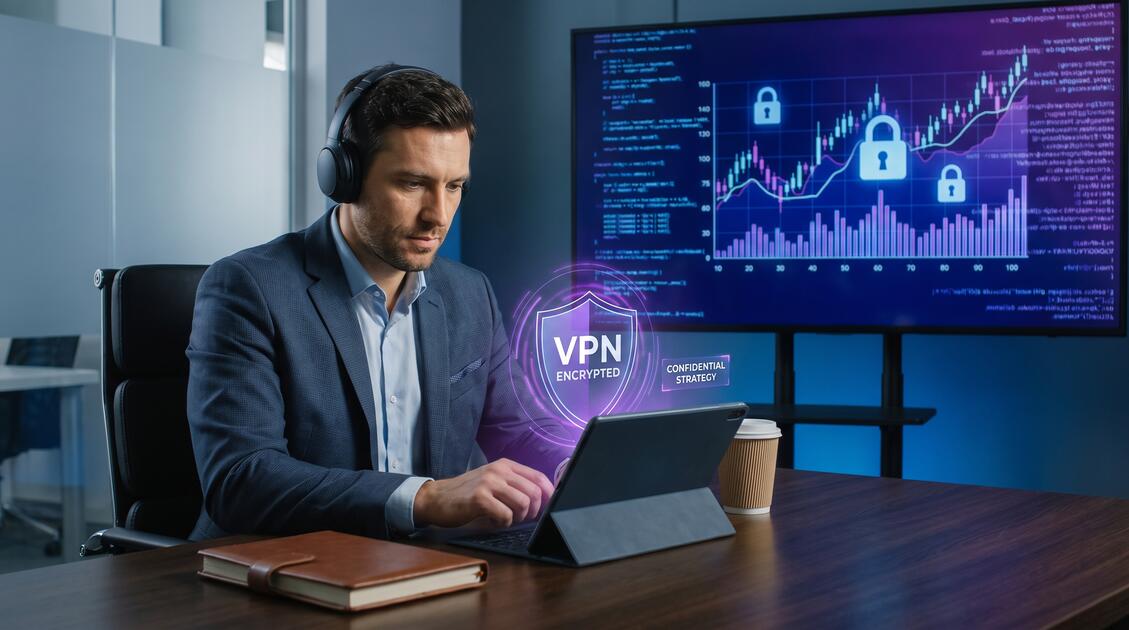
Management consultants are among the most targeted professionals for cyber attacks and corporate espionage. You hold the crown jewels of strategic business intelligence: confidential merger & acquisition plans before public announcement, competitive intelligence worth millions, board-level strategic decisions, financial projections, organizational restructuring plans, and detailed client operational data. This makes you a high-value target for competitors, hostile nation-states, and cybercriminals willing to pay $500,000 to $5,000,000+ per engagement on dark markets.
Why Management Consultants Are Prime Targets
Management consultants operate at the intersection of premium data value, organizational vulnerability, and limited IT infrastructure. Here's why corporate espionage actors prioritize your profession:
- Ultra-premium client data: Strategic M&A plans worth billions in shareholder value. Competitors pay $500K-$5M+ for pre-announcement intelligence that influences stock trading, competitive positioning, and business development timing.
- Compressed timelines: Consulting engagements operate on tight schedules—often remote, across multiple client sites, and under pressure. This creates security gaps you're forced to navigate.
- Limited dedicated IT: Consulting firms (especially boutiques and independent practitioners) lack enterprise IT teams. Security responsibilities fall on individuals juggling client work, travel, and billable hours.
- Multi-client exposure: A single breach of your devices exposes dozens of active client engagements simultaneously, multiplying the intelligence value to attackers.
- Ransomware targeting explosion: Attacks on consulting firms increased 410% since 2023, with average ransom demands of $200K-$800K, because firms can't afford engagement delays during critical client projects.
- Client trust dependency: A single security breach destroys decades-old consultant-client relationships, triggers contract termination, creates litigation risk, and generates referral death spirals in your network.
Sensitive Strategic Data at Risk
Your laptop, phone, and cloud storage contain intelligence that competitors and hostile actors actively target:
- M&A intelligence: Target company identification, valuation models, negotiation strategies, board approval timelines, deal structure, financing details. Pre-announcement disclosure influences billions in stock movement.
- Strategic business plans: Market entry strategies, product roadmaps, organizational restructuring, executive changes, cost-cutting initiatives, market exit plans.
- Competitive intelligence: Market share analysis, competitor weaknesses, pricing strategies, customer win/loss analysis, market consolidation plans.
- Client financial data: Revenue figures, profit margins, cash flow problems, customer concentration, supplier relationships, debt structures.
- Operational details: Supply chain vulnerabilities, manufacturing locations, employee counts, facility layouts, technology infrastructure.
- Board-level communications: Executive compensation, performance metrics, strategic disagreements, acquisition interests, crisis plans.
- Client relationships & contacts: Executive directories, decision-maker information, org charts, relationship maps useful for social engineering.
Compliance & Legal Obligations
Your consulting agreements don't just expect security—they legally mandate it. Breach penalties can reach millions:
- NDA & confidentiality clauses: Typically impose $5M-$100M+ breach penalties, injunctions, and client litigation. Insurance often excludes negligent security.
- Professional standards: Consulting industry ethics codes require "reasonable security measures." Your peers maintain VPN + encryption + device controls. Not maintaining these creates liability.
- Regulatory requirements: Clients in finance, healthcare, energy, and government impose their own compliance mandates (SOC 2, HIPAA, FedRAMP). Your network access may require VPN certification.
- Data handling contracts: Clients often require signed technology agreements specifying encryption, access controls, and VPN usage for work on their data.
- Professional liability: Your malpractice insurance requires evidence of "industry standard" security. Documentation of VPN usage becomes your proof of compliance.
Warning: Client Site & Hotel WiFi Exposure
You're sitting in a client's lobby, coffee shop, or hotel WiFi reviewing strategic plans on your laptop. Without VPN, you're broadcasting unencrypted M&A details, board presentations, and financial models across the WiFi network. Attackers in the same location intercept everything. Even client-provided WiFi can be compromised—we've documented consultants accessing confidential strategy on networks simultaneously used by competing firms.
Digital Threats to Consulting Firms
You face a sophisticated threat landscape because of your access and data value:
- Man-in-the-middle attacks on public WiFi: Coffee shop, airport, hotel WiFi is unencrypted. Attackers intercept your credentials, email sessions, cloud storage access, video calls, and file transfers.
- Email compromise & phishing: Attackers impersonate executives or clients to steal credentials. Compromised email gives access to Gmail, OneDrive, project repositories containing strategic documents.
- Cloud storage misconfiguration: Shared Google Drive folders, OneDrive links, or Dropbox files accidentally set to "public" expose client data to search engines and attackers.
- VPN connection interception: Attackers monitor your login sessions and compromise your home/office VPN access, maintaining persistence to your firm's network.
- Mobile device theft: Lost iPhone or Android containing client files, email, messaging apps, and authentication tokens. Without encryption and remote wipe, devices become intelligence goldmines.
- Third-party breaches: Project management tools (Asana, Monday.com), document storage (Box, Sharepoint), or consulting platforms get breached. Your credentials and client data exposed.
- Supply chain compromises: VPN apps, collaboration tools, or software libraries you trust become attack vectors distributing malware to your devices.
Corporate Espionage & Consulting Intelligence
Consulting firms face industrial espionage at scale that most industries don't encounter:
- Competitor intelligence operations: Competitors actively target consultants to learn about rival clients' strategies, capabilities, and vulnerabilities.
- Acquisition intelligence: Companies searching for acquisition targets pay penetration testing firms and intelligence operatives to steal strategic information from target companies' consultants.
- Activist investor targeting: Activist funds hire investigators to breach consultants and steal information enabling hostile takeovers or shareholder campaigns.
- Nation-state intelligence: Governments target consulting firms for industrial espionage. Chinese APTs systematically compromise consultants advising technology, defense, and energy companies.
- Ransomware double-extortion: Attackers steal your client documents, then demand ransom from both you AND your clients (threatening to release M&A plans, financial data, operational secrets).
Ransomware impact on consulting: Attacks on consulting/professional services firms increased 410% since 2023. Average ransom: $200K-$800K. But the real damage is engagement delays—if your devices are locked down during a critical client project timeline, you lose the engagement and client trust. Competitors prey on this vulnerability.
Mobile & Remote Work Security Risks
Consultants work everywhere, which creates security complexity:
- Home office WiFi: Your residential network may be less secure than enterprise WiFi. Compromised router = full access to your device and files.
- Coffee shop / public WiFi: Zero encryption. Attackers on the same network see everything: client presentations, emails, credentials, file transfers.
- Client office networks: Even trusted client networks may be compromised or monitored. Competitors sometimes plant network monitoring on client premises.
- Hotel / travel WiFi: Hotels notorious for compromised WiFi. Business travelers using hotel networks face credential theft and device compromise.
- Mobile app vulnerabilities: Consultant productivity apps (Gmail, Teams, Slack, OneDrive) may cache credentials insecurely or leak data in transit.
- Cellular network interception: Cellular networks (4G/5G) are encrypted, but SMS-based authentication is vulnerable to SIM swapping and interception.
Did You Know? Competitive Theft Is Common
We've documented cases where consulting firms discovered competitors obtained their strategic proposals for major clients before the pitch. Investigation revealed compromised consultant email accounts and intercepted emails. Competitors used this intelligence to underbid and win contracts. With VPN + encryption, this attack becomes nearly impossible because credentials are protected and communications are encrypted end-to-end.
How VPN Protects Your Consulting Practice
A high-quality VPN (like Free VPN) is your first line of defense against the threats targeting consultants:
- Public WiFi encryption: VPN encrypts all traffic on your device before it touches the WiFi network. Coffee shop attackers see encrypted data, not your credentials, emails, or files.
- IP masking & location privacy: VPN hides your real IP address and location. Attackers can't target you by geography or identify which client's office you're in.
- DNS privacy: Prevents ISPs, WiFi operators, and network monitors from seeing which websites/services you access (Slack, Gmail, OneDrive, project management tools).
- Man-in-the-middle prevention: Encrypted VPN tunnel prevents attackers from intercepting credentials, session tokens, or file transfers over public networks.
- Video call protection: Client calls on Zoom, Teams, Google Meet over public WiFi are encrypted end-to-end with VPN protecting the connection layer.
- Compliance documentation: VPN usage creates security audit trail proving you maintain industry-standard protections. Critical for client contracts and liability defense.
7-Layer Security Strategy for Consultants
VPN is your essential foundation, but should be part of a comprehensive strategy:
- Layer 1: Always-on VPN. Enable automatic VPN connection on all devices. Use always-on VPN feature with kill switch—if VPN disconnects, your internet shuts off automatically. Never work unencrypted.
- Layer 2: Device encryption. Enable full disk encryption (macOS FileVault, Windows BitLocker). If your device is stolen, encryption protects all client data.
- Layer 3: Multi-factor authentication. All critical accounts (email, cloud storage, client systems) require strong MFA (authenticator app or hardware key, NOT SMS).
- Layer 4: Secure communications. Use encrypted email (for sensitive client intel), encrypted messaging (Signal), and end-to-end encrypted video calls.
- Layer 5: Data handling & access control. Limit local file storage. Keep client documents in encrypted cloud storage with access controls. Delete files after engagements end.
- Layer 6: Monitoring & logging. Monitor your devices for suspicious activity. Review cloud storage access logs. Check email forwarding rules (attackers often add forwarding addresses to maintain access).
- Layer 7: Incident response & backups. Maintain offline backups of critical files (encrypted). Have incident response plan: device lockdown procedures, forensics contact info, client notification templates.
Pro Tip: Always-On VPN Workflow for Consultants
Set up Free VPN with auto-connect enabled on all devices. When you open your laptop in any location—home, coffee shop, airport, client office—VPN connects automatically before any apps launch. This eliminates the risk of forgetting to connect VPN before opening a sensitive client file or email. The automatic kill switch prevents any traffic from leaking unencrypted if VPN drops unexpectedly.
Key Takeaways
- Management consultants hold ultra-premium strategic data worth $500K-$5M+ per engagement to competitors and hostile actors
- Corporate espionage targeting consulting increased 410% since 2023, with ransom demands averaging $200K-$800K
- M&A details, competitive intelligence, and strategic plans are your highest-value assets and primary attack targets
- Client NDAs impose $5M-$100M+ breach penalties if you fail to maintain reasonable security measures
- Public WiFi, hotel networks, and coffee shops expose your unencrypted client files, credentials, and video calls to attackers
- Always-on VPN with auto-reconnect eliminates the risk of unencrypted work while traveling or at client sites
- VPN usage creates audit trail proving industry-standard security compliance for client contracts and liability defense
- Combine VPN with device encryption, MFA, secure communications, and access controls for comprehensive security strategy
Protecting Strategic Client Relationships
As a management consultant, your professional reputation is built on the trust your clients place in your discretion and competence. A data breach isn't just a security incident—it's a betrayal of client confidentiality that can end 30-year relationships and create legal liability reaching millions of dollars.
VPN is your foundational security tool because it encrypts the data transmission layer where most consultant attacks succeed. When you connect to public WiFi without VPN, you're exposing M&A plans, financial data, and strategic intelligence to attackers. When you use always-on VPN, you're making it economically and technically infeasible for attackers to intercept your communications.
The consulting firms winning in 2026 aren't just delivering better insights to clients—they're protecting that insight with enterprise-grade security that proves they take client confidentiality as seriously as strategy itself. Download Free VPN today and make always-on encryption your default workflow.