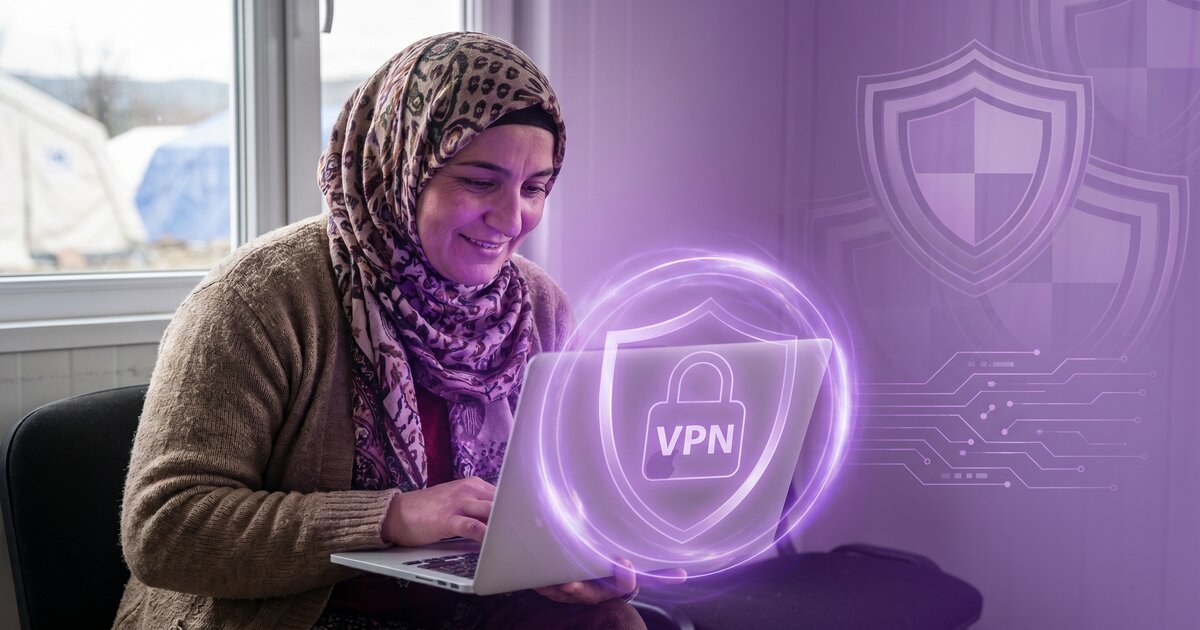
Displacement, whether forced by persecution, war, violence, or natural disaster, places you in one of the most vulnerable positions imaginable. You're navigating a new country, uncertain legal status, limited resources, and the constant fear of being found by those who forced you to flee. In this fragile moment, your digital presence can mean the difference between safety and capture—between reuniting with family and permanent separation.
Why Refugees & Asylum Seekers Need VPN
For refugees and asylum seekers, the internet represents both hope and danger. It's how you stay connected to loved ones, access critical asylum resources, and rebuild your life. But every connection without a VPN leaves digital breadcrumbs that can be traced back to you, your location, and your family.
The risks are not theoretical. Governments, criminal networks, traffickers, and hostile groups actively monitor digital activity to track, target, and harm displaced populations. Your IP address alone reveals your current location with precision. Your browsing history, email communications, and account activity reveal who you're trying to reach and what you're searching for. For asylum seekers, this information can be used against you in deportation proceedings. For refugees, it can expose you to:
- Government persecution — Authorities in the country you fled monitoring your activity to justify pursuing you extradition
- Human trafficking networks — Criminals tracking vulnerable displaced populations for exploitation
- Family endangerment — Hostile groups using your communications to locate and harm relatives back home
- Document theft & identity fraud — Criminals stealing your digital identity and any identity documents you access online
- Immigration enforcement — Authorities in your current location using your digital footprint as evidence against asylum claims
Did You Know?
According to the UN Refugee Agency, 120 million people are forcibly displaced worldwide. That's 1 in 67 people on Earth. Every single one of them faces digital safety risks that most people never consider.
Unique Digital Dangers During Displacement
Refugees and asylum seekers face distinct digital dangers that go far beyond typical online privacy concerns. When you're displaced, you're operating from unfamiliar networks, unstable connections, borrowed devices, and with extreme emotional and financial stress.
Exploitation by Human Traffickers
Human trafficking networks specifically target vulnerable displaced people. They monitor online communities where refugees seek information about housing, employment, or documentation help. Without VPN protection, your digital interactions can mark you as a target for exploitation, forced labor, or sexual trafficking.
Document Theft & Identity Fraud
Your identity documents—passport, refugee documents, asylum paperwork—are among your most valuable possessions. When you upload them to access services or send them through email without VPN protection, criminals can steal them. This creates cascading problems: fraudsters access your accounts, your identity is compromised, and your asylum case can be jeopardized.
Hostile Border & Immigration Monitoring
Border authorities actively monitor digital activity, particularly near international boundaries. If you're attempting to reach a safe country, unprotected internet use can alert authorities to your location, timing, and travel plans. Even after you've reached safety, continued unprotected internet use can undermine your asylum claim by revealing information that immigration authorities use against you.
Critical Warning
Never access accounts, email, or documents without VPN protection. Even one unprotected connection can expose your location and identity to hostile actors. If you're currently at risk, use VPN BEFORE accessing any online resources.
Government Surveillance & Border Risks
Governments actively monitor the internet for security threats—and often classify refugees and asylum seekers in that category. Whether you're fleeing political persecution, religious intolerance, LGBTQ+ persecution, or gender-based violence, your government of origin is motivated to prevent you from seeking safety and may actively work with other governments to track you.
ISP Monitoring & Network Logging
Your internet service provider logs every connection you make. In many countries, this data is automatically shared with government agencies. Without a VPN, your ISP knows exactly where you are, what you're doing, and who you're communicating with. This information can be used to:
- Track you across borders
- Identify your communications with asylum lawyers, refugee organizations, or family members
- Build a dossier of your activities to use against you in deportation hearings
- Coordinate with hostile governments to facilitate your capture or extradition
Border Crossing Interception
Border authorities at international crossings increasingly monitor digital activity, particularly near refugee routes. They use this data to identify vulnerable populations, apprehend people fleeing persecution, and prevent asylum seekers from reaching safe territory. A VPN masks your location and prevents authorities from knowing you're near a border crossing.
Protecting Family Connections & Communications
Your family—those you left behind and those you've been separated from—represent your most critical vulnerability. Hostile actors know this. They monitor your communications hoping you'll inadvertently reveal the location of relatives, supporting evidence for prosecution, or information they can use as leverage against you.
Safeguarding Family Communications
Every email, message, and video call you make without VPN protection can be monitored and logged. This surveillance can be used to:
- Locate family members and persecute them
- Gather evidence to use against them in your country of origin
- Intercept communications to blackmail or coerce family members
- Identify other refugees or dissidents through family networks
Protecting Relatives Back Home
Even though you've escaped, your relatives back home may still be in danger. Hostile governments often target the families of refugees and dissidents as punishment. By using a VPN and being extremely careful about what information you share online—even to trusted family—you protect them from becoming collateral damage in the persecution campaign against you.
Pro Tip
When communicating with family, never share your specific location, the immigration office you're visiting, your lawyer's contact information, or details about your asylum case. Even "safe" information can be pieced together by surveillance to create a complete picture of your situation.
How VPN Protects Your Safety & Identity
A VPN (Virtual Private Network) creates an encrypted tunnel between your device and a remote server. This encryption means:
IP Address Masking
Your real IP address—which reveals your precise location—is replaced with the VPN server's IP address. Instead of showing you're in a refugee shelter in Berlin, your internet activity appears to come from a VPN server in another country entirely. This prevents location tracking by governments, criminals, or surveillance networks.
Complete Traffic Encryption
Everything you do online—emails, browsing, messages, document uploads—is encrypted. Your ISP can't see what websites you're visiting. Border authorities can't see your communications. Criminals can't intercept your identity documents. Only you and the VPN provider know what you're doing online.
DNS Protection
When you visit a website, your device makes a DNS query to translate the domain name into an IP address. Without protection, this query reveals every website you visit to your ISP and network administrator. A quality VPN like Free VPN includes DNS protection that encrypts these queries, preventing anyone from seeing your browsing patterns.
Protection on Untrustworthy Networks
As a refugee, you're often connecting from borrowed WiFi, public networks, or shelters. These networks are frequently monitored or compromised. A VPN creates a secure tunnel even on these dangerous networks, protecting you from other users, network administrators, and hostile actors.
Building a Multi-Layer Safety Strategy
A VPN is essential, but true safety requires multiple protective layers working together.
Step 1: Use VPN Before Everything
ALWAYS connect to VPN before accessing ANY online accounts or services. Make VPN your first action before opening your browser or email. Free VPN offers automatic connection on startup—enable this feature so you're never accidentally online without protection.
Step 2: Secure Your Accounts
- Strong, unique passwords: Use a password manager to create and store complex passwords. Never reuse passwords across accounts.
- Two-Factor Authentication (2FA): Enable 2FA on every critical account—email, documents, financial services, legal case materials. This prevents account takeover even if your password is compromised.
- Recovery options: Set up recovery email addresses and phone numbers that you control and secure. This prevents hostile actors from locking you out of accounts.
Step 3: Protect Your Device
- Device security: Keep your operating system, apps, and security software fully updated. These updates patch vulnerabilities that criminals exploit.
- Antivirus/malware protection: Use legitimate security software to detect and remove malware before it can spy on you.
- Avoid borrowed devices: When possible, use your own device for sensitive activities. If you must use a borrowed device, use it only through a VPN and don't store sensitive information.
Step 4: Secure Your Documents
Your digital documents are critical—asylum case files, identity documents, communications with lawyers, evidence of persecution. Protect them with:
- Encrypted cloud storage (protected with a very strong password)
- Offline backups on encrypted USB drives
- Never uploading originals—only encrypted copies
- Keeping offline copies of critical documents
Step 5: Minimize Information Sharing
Even with VPN protection, be extremely thoughtful about what information you share:
- Don't post location information, even in private messages or encrypted apps
- Don't reveal your immigration status or asylum case details to online contacts
- Don't participate in online communities using your real name
- Be cautious in encrypted messaging apps—your connections are visible to other users
- Use separate accounts for different purposes (family communications, asylum case management, general internet use)
Did You Know?
Many refugee tracking organizations recommend maintaining a detailed, encrypted record of your asylum case—every communication with officials, every hearing date, every piece of evidence. This documentation can be critical if your case is challenged, and VPN + encrypted storage ensures this record is protected.
Resources & Support Available
You are not alone. Organizations worldwide are dedicated to supporting refugees and asylum seekers with both practical safety and digital security guidance.
Refugee & Asylum Support Organizations
- UNHCR (UN Refugee Agency) — unhcr.org — Official refugee services and protection resources
- International Rescue Committee (IRC) — rescue.org — Comprehensive refugee support and case management
- Amnesty International — amnesty.org — Human rights advocacy and asylum support
- Human Rights Watch — hrw.org — Documentation of persecution and support for asylum seekers
- Local Refugee Resettlement Agencies — Search for your country/region to find local organizations
Digital Security & Privacy Organizations
- Freedom of the Press Foundation — freedom.press — Security guidance for journalists, activists, and vulnerable populations
- Guardian Project — guardianproject.info — Privacy and security apps designed for high-risk users
- Tactical Tech — tacticaltech.org — Digital security training for civil society
Mental Health & Trauma Support
Displacement and persecution cause deep trauma. Mental health support is critical and available:
- Refugee Mental Health Alliance — Organizations providing trauma-informed psychological support
- Crisis hotlines — Most countries have crisis lines (often available 24/7) supporting refugees and asylum seekers
- Support groups — Connecting with others who've experienced displacement reduces isolation and provides practical advice
Key Takeaways
- Refugees and asylum seekers face unique digital dangers including government persecution, human trafficking, family endangerment, and document theft
- Government surveillance, border monitoring, and digital tracking pose critical risks during displacement and asylum processes
- VPN masks your location, encrypts family communications, and prevents surveillance during your most vulnerable moments
- Always connect to VPN BEFORE accessing any accounts, documents, or family communications
- Use strong, unique passwords and enable 2FA for critical accounts like email, documents, and financial services
- Document everything securely (photos, recordings) but protect these files with encryption and offline backups
- Connect only to trusted networks and consider a dedicated device for sensitive communications
- Seek support from refugee organizations, legal aid services, and trusted NGOs for additional safety guidance
Conclusion: Safety Enables Hope & Healing
Displacement is one of the most traumatic experiences a person can endure. You've survived persecution, dangerous journeys, loss, and uncertainty. You deserve safety—physical safety, legal protection, and digital privacy that allows you to rebuild your life without fear.
A VPN is a powerful tool that protects your digital presence and prevents surveillance that can endanger you and your family. It's not a complete solution—nothing can replace legal protection, asylum representation, and community support—but it removes a critical vulnerability from your situation.
Free VPN is committed to supporting refugees, asylum seekers, and all displaced individuals. We provide strong encryption, no logs, no data collection, and absolute privacy. We don't ask for registration, we don't track your activity, and we don't sell your data to anyone.
Your safety matters. Your family matters. Your right to privacy and protection matters. Download Free VPN today and take one critical step toward safety and hope.