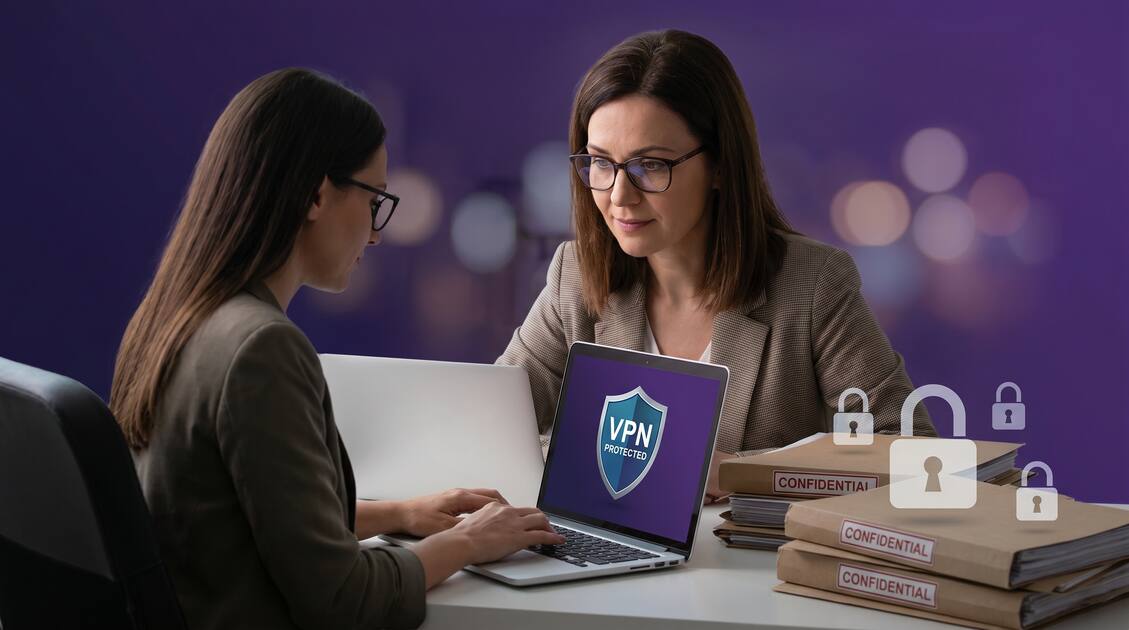
Social workers are trusted custodians of profoundly sensitive information. Every day, you work with abuse survivors, vulnerable families, foster children, and individuals in crisis. Your clients share their deepest pain, their most intimate struggles, and their most vulnerable moments with you—trusting that their confidentiality is protected and their data remains secure.
But in an increasingly connected world, that confidentiality faces unprecedented threats. Unencrypted case file transmissions, unsecured home office networks, mobile devices accessed on public WiFi, workplace surveillance, and data breaches all put your clients' sensitive information at risk. When case files leak, you don't just lose data—you re-traumatize already vulnerable clients, violate legal confidentiality obligations, and compromise the trust that makes your work possible.
This guide addresses the unique security and privacy challenges social workers face and shows you how to protect your practice, your clients, and yourself with comprehensive security strategies centered on VPN encryption.
Why Social Workers Face Unique Digital Threats
Social workers occupy a unique position of trust. Your clients confide in you because they know you're bound by professional confidentiality standards. But this trust creates a critical security responsibility:
- Custodians of sensitive secrets: Your case files contain abuse histories, trauma narratives, family crises, substance use records, mental health conditions, financial struggles, and child welfare decisions—some of the most sensitive personal information anyone will ever share.
- Vulnerable client populations: Many of your clients face ongoing risks (domestic violence survivors hiding from abusers, undocumented families fearing deportation, abuse survivors needing continued protection). A data breach doesn't just violate privacy—it can put clients in physical danger.
- Complex confidentiality framework: Social workers operate within strict professional confidentiality obligations (NASW Code of Ethics) and legal requirements (mandatory reporting, client privilege), making data security both ethically and legally essential.
- Workplace surveillance pressures: You work within agencies that monitor employee activity, access client data systems, and may surveil your professional communications—creating tension between employer access and client confidentiality.
- Distributed work environments: Remote casework, home office documentation, mobile device access, and cross-agency collaboration mean sensitive data moves across multiple networks and devices, each creating security vulnerabilities.
Critical: Case File Breaches Have Severe Consequences
A single data breach affecting social work case files impacts vulnerable clients directly. Abuse survivors whose location leaks face re-victimization. Families in confidential foster care proceedings face community exposure. Clients seeking addiction treatment risk employment and housing discrimination. The ethical and legal liability falls directly on you.
Client Confidentiality & Professional Obligations
Unlike casual privacy concerns, your confidentiality responsibilities are legally binding and ethically fundamental:
Professional Standards
- NASW Code of Ethics: The National Association of Social Workers requires that you maintain client confidentiality and protect client records. Breaches violate your professional code and can result in license suspension or revocation.
- State licensing laws: Most states regulate social worker confidentiality through licensing requirements. Unauthorized disclosure of client information is grounds for license loss.
- HIPAA (when applicable): If you work in healthcare settings or have access to health information, HIPAA creates federal confidentiality requirements with strict breach notification obligations.
- Client privilege: In some contexts, communications between social workers and clients may be legally privileged, meaning they cannot be disclosed without client consent or court order.
Legal Consequences of Breaches
- License suspension/revocation: Confidentiality violations are grounds for losing your professional license.
- Civil liability: Clients can sue for damages if a breach causes them harm.
- Criminal liability: In some jurisdictions, unauthorized disclosure of confidential information may be prosecutable as a crime.
- Agency liability: If you're employed by an agency, breaches may also create liability for your employer, affecting your workplace and potentially your job security.
VPN is not a complete solution for confidentiality obligations, but it's a critical technical safeguard that prevents network-level exposure of case file transmissions and communications.
Case Files & Sensitive Client Data Risks
Social work case files contain the kind of information criminals and bad actors actively seek:
- Abuse and trauma history: Detailed accounts of violence, exploitation, abuse, and trauma that re-traumatize clients if exposed publicly.
- Family situations: Information about family dysfunction, substance use, neglect, or abuse that affects family privacy and relationships.
- Child welfare decisions: Confidential child custody, foster care placement, and adoption information.
- Mental health conditions: Diagnoses, medications, treatment plans, and mental health history subject to privacy laws.
- Financial information: Income, benefits, employment status, and financial hardship information used in case planning.
- Identifying locations: Client home addresses, shelter locations, school information, and other identifying details used in safety planning.
- Personal identifiers: Social security numbers, dates of birth, medical record numbers, and other data enabling identity theft.
When case files are accessed or transmitted over unencrypted connections, hackers can intercept them. When stored on unsecured devices, they can be stolen. When backed up to unencrypted cloud storage, they can be accessed by service providers or breached by attackers.
Workplace Surveillance & Professional Privacy
Working in a social work agency creates additional surveillance challenges:
- Email monitoring: Many agencies monitor and log all employee email communications, creating a record of client-related conversations and potentially exposing case discussions.
- Network monitoring: Agencies monitor network traffic, potentially logging which case file systems you access, when, and for how long.
- Device management: Employer-provided devices (laptops, phones, tablets) are often monitored for apps, files, and usage patterns.
- Location tracking: Agency-provided devices may be GPS-tracked, logging your physical location and potentially revealing client home addresses or shelter locations you visit.
- Social media surveillance: Agencies may monitor your social media to ensure you're not discussing clients or cases online.
While most monitoring is intended for legitimate purposes, it can create transparency about your casework activities. A VPN helps establish a boundary between your personal online activities and your work network access, though it cannot eliminate agency monitoring of work systems themselves.
Home Office & Remote Casework Security
If you work remotely or from home, you face additional security vulnerabilities:
- Home WiFi security: Your home WiFi may use default router passwords, weak encryption, or unpatched security vulnerabilities, allowing anyone nearby to intercept your traffic.
- Shared networks: If you live with others, they may have access to your network traffic, files, or can see case file information on your screen.
- Mobile work: If you access case files from coffee shops, libraries, or mobile hotspots, you're using unencrypted public networks vulnerable to interception.
- Unsecured backup: Case files backed up to personal cloud storage (Google Drive, Dropbox, iCloud) may not meet confidentiality requirements and can be breached.
- Device sharing: Computers or tablets used for casework may also be used by family members, creating exposure risks.
VPN encryption protects all traffic from your home office, regardless of your WiFi security or the network you're using.
Client Location & Safety Risks
Social work involves protecting vulnerable clients, and location privacy is critical:
- Abuse survivors in hiding: If an abuse survivor's location is revealed through case file leaks or online activity tracking, an abuser may find them.
- Undocumented families: If location data is breached, immigration enforcement agencies could locate families in hiding.
- Witness protection situations: Some clients may be in confidential relocation programs or hiding from dangerous individuals.
- Child abuse cases: In cases involving child endangerment, location privacy protects children from dangerous individuals.
Without VPN protection, your internet service provider (ISP) can see which websites you access, including case management systems. This creates a record of your casework and potentially reveals client locations through case file access patterns.
How VPN Protects Social Workers
A VPN (Virtual Private Network) encrypts all your internet traffic through a secure tunnel, providing several critical protections:
Encrypted Case File Transmission
When you access case management systems or transmit case files over VPN, the connection is encrypted end-to-end. An attacker monitoring your network cannot see the case files you're accessing or uploading, only that you're connected to an encrypted tunnel.
ISP Monitoring Prevention
Your ISP normally has visibility into all your online activity—which websites you visit, case management systems you access, and when you're doing casework. A VPN hides this activity from your ISP. Your ISP can see you're using a VPN, but not what you're doing through it.
Public WiFi Protection
When you work from a coffee shop or other public WiFi location, everyone on that network can potentially intercept unencrypted traffic. VPN encryption protects your case file access and casework communications on public networks.
Home Network Security
VPN protects your home office work even if your home WiFi is poorly secured or shared with others who might snoop. All traffic through the VPN tunnel is encrypted, preventing network-level interception.
Agency Monitoring Boundaries
While VPN cannot prevent your employer from monitoring work-related activity on work systems, it can create clear boundaries between your personal online activities and work-related access. This is important for protecting your own privacy while respecting legitimate agency oversight of work systems.
Pro Tip: VPN First, Always
Make VPN your default before accessing any case management system or client information. Whether you're at home, at the agency office on WiFi, or remotely, connect to VPN first, then access work systems. This ensures all case file transmissions are encrypted regardless of the network you're using.
Building a Comprehensive Security Strategy
VPN is critical, but protecting client confidentiality requires a multi-layer defense strategy:
Layer 1: Network Encryption (VPN)
- Connect to VPN before accessing any case management systems or client information
- Use VPN on home office, agency office WiFi, public WiFi, and mobile networks
- Enable auto-connect VPN so you're protected even if you forget to manually connect
- Verify VPN is connected before opening any case files or accessing client data
Layer 2: Device Security
- Keep devices updated: Install all security patches and software updates promptly to prevent vulnerabilities.
- Use strong passwords and 2FA: Protect all work accounts with unique passwords and two-factor authentication.
- Encrypt hard drives: Use full-disk encryption on all devices accessing case files (BitLocker on Windows, FileVault on Mac).
- Disable auto-login: Require a password every time you log in to prevent unauthorized access if your device is stolen or left unattended.
Layer 3: Data Storage & Backup
- Use agency-approved systems: Store case files only in agency-approved case management systems designed for confidentiality compliance.
- Avoid personal cloud storage: Don't backup case files to personal Google Drive, Dropbox, or other unencrypted personal accounts.
- Encrypted backup only: If you backup to personal devices, use encrypted external drives or fully-encrypted cloud services.
- Secure file disposal: When deleting case files, use secure deletion tools that prevent file recovery.
Layer 4: Communication Security
- Email limitations: Understand that agency email is often monitored and may not be confidential. Avoid discussing sensitive case details via unencrypted email.
- Phone security: Use approved secure messaging platforms for case-related communications, not text messages or personal apps.
- Avoid screenshots: Don't screenshot case file information to share via email or messaging—use secure file transfer methods instead.
Layer 5: Operational Security
- Screen privacy: When accessing case files, position your screen to prevent others from viewing sensitive information.
- Lock devices: When you step away from your computer, always lock it (Windows + L or Command + Control + Q) so others can't access open case files.
- Close case files: Close case file tabs and systems when you're not actively using them, reducing exposure window.
- Avoid discussing cases: Don't discuss specific case details in hallways, break rooms, or public spaces where others might overhear.
Layer 6: Professional Accountability
- Follow agency protocols: Comply with your agency's confidentiality policies and data handling procedures.
- Confidentiality training: Complete confidentiality and privacy training required by your agency and licensing requirements.
- Incident reporting: If you suspect a confidentiality breach, report it immediately to your supervisor and agency privacy officer.
- Regular audits: Periodically review your own security practices to identify gaps or vulnerabilities.
This six-layer approach addresses network security (VPN), device-level protection, data storage and backup, communication security, your day-to-day practices, and professional accountability—creating comprehensive protection for your clients' sensitive information.
Important: VPN Has Limitations
VPN encrypts your connection and hides your activity from your ISP and network administrators, but it cannot protect against threats at the application level. Malware on your device, phishing attacks that trick you into revealing information, or compromised passwords are not prevented by VPN alone. That's why the multi-layer approach is essential—VPN is one critical piece of comprehensive client protection.
Key Takeaways
Key Takeaways
- Social workers handle extremely sensitive client data (abuse history, trauma, family situations, child welfare) requiring the highest protection standards
- Professional confidentiality is legally mandated and ethically essential—breaches violate NASW standards and client trust
- Case file breaches can re-traumatize vulnerable clients and create serious legal and professional liability
- Home-based casework, remote documentation, and mobile devices create new security vulnerabilities
- Client retaliation, workplace harassment, and location tracking pose real personal safety threats to social workers
- VPN encryption protects confidential case communications, documentation, and prevents ISP/employer monitoring
- Multi-layer security combines VPN with encrypted storage, device security, and operational safeguards for vulnerable populations
- Regular security audits and professional confidentiality protocols ensure clients receive the protection they deserve
Protecting Confidentiality Is Your Core Professional Responsibility
Every day you work as a social worker, vulnerable clients trust you with their most intimate information. They disclose abuse histories, family crises, and personal struggles because they believe you'll keep their information safe and secure. That trust is sacred—it's the foundation of your ability to do this vital work.
In a world of increasing digital threats, protecting that confidentiality requires active, intentional security practices. VPN encryption is one critical tool that prevents network-level interception of case files and communications. Combined with device security, encrypted backup, secure communications, operational safeguards, and professional accountability, you create a comprehensive defense protecting your clients' information and your professional integrity.
Your clients face real dangers—abusers, immigration enforcement, discrimination. When you protect their confidentiality, you're not just following professional standards. You're protecting their safety, their dignity, and their right to seek help without fear of exposure.
Download Free VPN today and make confidentiality protection part of your daily casework practice. Your clients deserve nothing less than the protection you're ethically bound to provide.