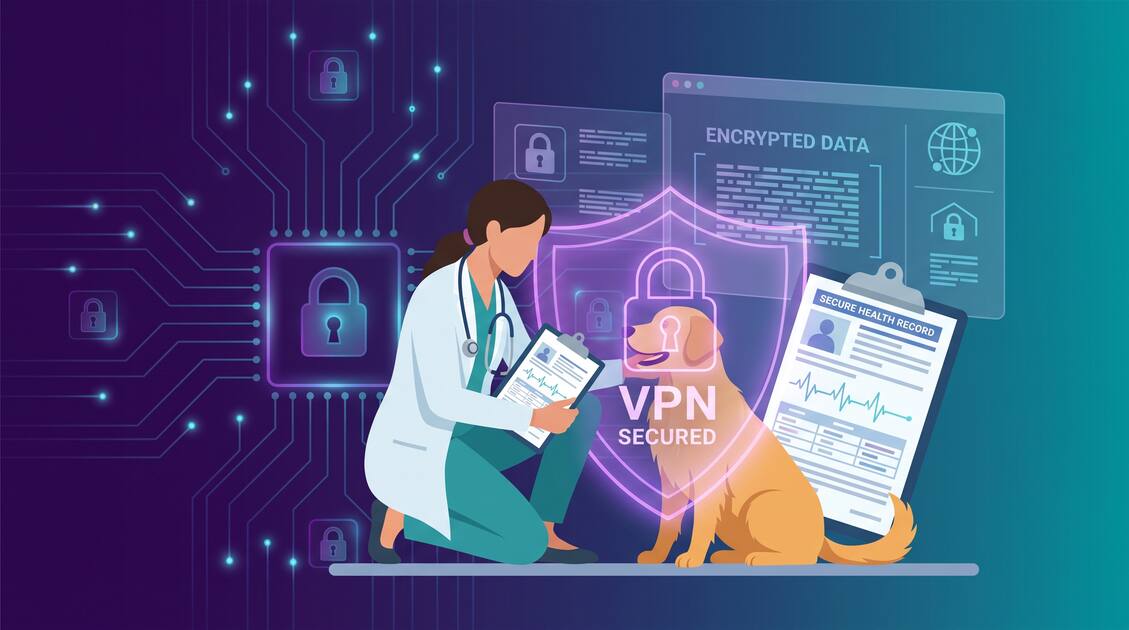
Veterinarians and animal healthcare professionals are trusted with highly sensitive information: pet health histories, client personal data, financial information, and intimate details about pet owners' lives and circumstances. Yet veterinary clinics often operate with minimal security protocols, leaving confidential information vulnerable to breaches, unauthorized access, and privacy violations. A VPN is essential for protecting client confidentiality, pet health records, and your veterinary practice in 2026.
Why Veterinarians Face Unique Digital Threats
Veterinarians occupy a unique and often-overlooked position in healthcare. You handle sensitive medical information about animals, which reveals surprising amounts about their owners. Appointment schedules show when homes are empty. Medical histories indicate family circumstances. Payment information reveals financial situations. In this highly digital age, that information is vulnerable to multiple threats:
- High-value information: Pet owners often reveal personal circumstances (divorce, death, relocation, financial troubles) when discussing their animals' health
- Distributed workforce: Associates, technicians, and staff work across multiple locations, often using personal devices and public WiFi
- Telemedicine expansion: Remote consultations transmit health information over unencrypted channels
- Appointment scheduling exposure: Appointment systems reveal when clients are away from home
- Weak network security: Many clinics prioritize operations over security, with shared guest WiFi and outdated systems
- Third-party vulnerabilities: Pharmacy partners, lab services, and record transfers introduce additional breach points
- Mobile practice risks: Traveling vets, barn calls, and farm visits expose devices to uncontrolled networks
Critical Risk: Location Exposure
Your appointment schedule reveals when client homes are empty and unoccupied. A breach exposing appointment times combined with client addresses creates a direct map for burglary. This information is often visible to staff, billing companies, and IT contractors without proper access controls.
Client Personal Information & Confidentiality Risks
Every appointment form captures personal information: names, addresses, phone numbers, email addresses, and sometimes social media accounts or alternate contact information. Pet owners often discuss deeply personal circumstances when talking about their animals—loss, grief, family changes, financial difficulties, health conditions that affect their pets. This information is confidential and must be protected:
- Identifying information: Names, addresses, phone numbers enable identity theft and direct targeting
- Family structure: Pet owner names reveal family relationships and household composition
- Personal circumstances: Discussions of euthanasia, new pet introductions, behavior issues reveal life events
- Financial information: Willingness to pursue expensive treatment indicates financial situation and assets
- Work schedules: When clients mention work patterns, travel, or schedule changes, you learn about their availability and movements
- Relationship status: Pet custody questions, name changes on accounts, and relationship discussions reveal personal situations
This information must remain confidential not just for ethical reasons, but because it's valuable to identity thieves, stalkers, and criminals looking to target vulnerable individuals.
Pet Health Records & Medical Data Vulnerabilities
Pet health records contain detailed medical histories, diagnoses, medications, vaccination records, and treatment plans. While animals aren't protected by HIPAA (which covers humans only), the information about pet owners revealed in these records is extremely personal and confidential. A breach of veterinary records exposes:
- Medical diagnoses: Behavior problems, anxiety treatments, and genetic health conditions reveal owner parenting approaches and family dynamics
- Medication records: Ongoing treatments indicate chronic health conditions in pets, showing owner investment and financial capacity
- Surgical history: Euthanasia records, breeding decisions, and elective procedures reveal owner values and life circumstances
- Vaccination and wellness data: Gaps in care indicate financial constraints or access limitations
- Behavioral consultation notes: Detailed observations about pet behavior and owner-pet relationships are highly personal
- Emergency records: Urgent vet visits during specific dates/times can reveal when owners were traveling, away, or unavailable
Did You Know?
Pet health records are increasingly targeted by data brokers and insurance companies seeking behavioral and health indicators about pet owners. Insurance claims based on pet health conditions can affect pet owner insurance rates in some jurisdictions.
Client Location & Schedule Tracking Risks
Appointment scheduling systems create a detailed record of when clients visit your clinic—information that's valuable to criminals, stalkers, and those with malicious intent. Combined with client addresses, this appointment data is dangerous:
- Burglary targeting: Appointment schedules reveal exactly when homes are empty and unoccupied, with client addresses providing direct targets
- Stalking/harassment: Regular appointment times show when clients are away from home and where they're traveling
- Custody disputes: Appointment schedules can be used to track family movements and establish patterns in custody conflicts
- Domestic violence: Information about a client's location at a specific time can be weaponized in abusive situations
- Family/relationship targeting: Learning when a specific person (or pet) is at your clinic reveals their location and routine
- Financial targeting: Regular expensive veterinary appointments indicate wealth and suggest valuable assets at home
This is why appointment scheduling systems must be kept confidential and never transmitted over unencrypted networks. Staff should never have unnecessary access to this information, and external contractors should never have visibility into appointment schedules.
Financial Data & Payment Information Security
Veterinary clinics handle sensitive financial information: credit card numbers, bank account details, payment history, and treatment costs. Payment processing systems are common targets for criminals, and a breach can expose hundreds of clients simultaneously:
- Credit card processing: Unencrypted payment processing exposes card numbers, expiration dates, and CVV codes
- Bank account access: Clients who set up automatic payments or provide banking details are vulnerable to fraud
- Financial records: Treatment costs reveal ability to pay for premium care—a proxy for overall wealth
- Payment patterns: Regular high-cost treatments indicate consistent financial capacity and valuable assets
- Billing information: Names, addresses, and payment data on invoices can be sold to third parties or used for fraud
- Insurance information: Pet insurance details may be targeted to exploit policy coverage or prevent claims
All payment information must be transmitted and stored using encryption. Staff processing payments must use VPN to prevent interception, and financial data must never pass through unencrypted email or unprotected systems.
Telemedicine Consultations & Remote Care Security
Telemedicine for veterinary care—remote consultations, video visits, and phone-based advice—has exploded since 2020. These consultations often occur over unencrypted channels, transmitting sensitive health information and personal conversations where anyone on the network can listen:
- Video consultation vulnerabilities: Unencrypted video calls can be intercepted, allowing attackers to see and hear confidential medical discussions
- Audio recording risks: Personal conversations about pet health, owner circumstances, and financial situations can be captured and exploited
- Data transmission exposure: Medical records sent during consultations can be intercepted on public or clinic WiFi networks
- Device camera access: Unencrypted consultations may allow attackers to capture information visible in the background of video calls
- Prescription delivery: E-prescriptions and medication records sent during telemedicine visits may be intercepted
- Client confidentiality: Video calls from home mean personal environments, family members, and household details are visible to clinic staff
All telemedicine consultations should occur over encrypted channels, and both clinicians and clients should use VPN protection to secure these interactions.
Clinic Network & Device Security
Most veterinary clinics operate shared networks with guest WiFi, shared computers, and multiple access points. This creates enormous security vulnerabilities:
- Guest WiFi exposure: Unencrypted guest networks allow any visitor to intercept data being transmitted by clinic staff
- Shared computers: Reception computers, kiosk tablets, and checkout systems used by multiple staff members become attack points
- Mobile device risks: Staff using personal phones and tablets on clinic WiFi transmit clinical information unencrypted
- Outdated systems: Many clinics run older software versions with known security vulnerabilities that aren't patched
- Weak password practices: Shared passwords across staff and systems mean anyone with access can view confidential information
- Third-party vulnerabilities: IT contractors, pharmaceutical reps, and service technicians often have network access without proper security oversight
Pro Tip: VPN-First Approach
The most effective protection strategy is a VPN-first approach: all staff members use a personal VPN on their devices before connecting to clinic networks. This ensures that even if the clinic WiFi is compromised, your personal data remains encrypted and secure.
How VPN Protects Veterinarians
A VPN (Virtual Private Network) encrypts all data transmitted to and from your device, protecting you from the threats outlined above:
IP Address Masking
A VPN hides your real IP address by routing your connection through an encrypted tunnel to a VPN server. This prevents network administrators, clinic WiFi operators, and internet service providers from seeing your online activities or identifying you as an individual user on shared networks.
Encrypted Data Transmission
All data you send—emails, messages, form submissions, appointment records, financial information—is encrypted before leaving your device. Even if someone intercepts the data, they see encrypted gibberish rather than readable information. This means payment information, client data, and medical records remain confidential even on unencrypted networks.
Public WiFi Protection
When you use clinic guest WiFi, clinic networks, or any public WiFi, a VPN ensures that attackers on that same network can't intercept your data. Client information, payment processing, and confidential communications stay protected even in environments with minimal security.
ISP Monitoring Prevention
Your internet service provider can normally see what websites you visit and what services you use (though not the specific content). A VPN prevents ISP-level monitoring by encrypting your traffic so your ISP only sees that you're connected to a VPN server, not what you're actually doing.
DNS Leak Prevention
DNS requests (which translate domain names into IP addresses) are often unencrypted, allowing networks to see what websites and services you're accessing. A VPN with DNS leak protection ensures these requests are also encrypted, preventing network-level visibility into your browsing and service usage.
Man-in-the-Middle Attack Prevention
Attackers on the same network can position themselves between your device and the internet, intercepting and modifying data. A VPN encrypts the entire connection end-to-end, making this type of attack impossible.
Building a Comprehensive Protection Strategy
A VPN is critical, but it's only one layer of a comprehensive protection strategy. Veterinary practices should implement multiple layers of security:
Layer 1: Network Encryption (VPN)
All staff should use a VPN like Free VPN on their devices before accessing clinic networks or handling client data. This ensures that even if clinic networks are compromised, individual devices remain protected.
Layer 2: Device Security
All devices accessing client data should be protected with: strong passwords or biometric authentication, automatic screen lock timeouts, encryption enabled, and regular security updates. Personal devices used for work should have mobile device management (MDM) policies enforced.
Layer 3: Data Handling & Storage
Client records should be: encrypted at rest (not just in transit), stored on secure servers with access controls, backed up regularly with encrypted backups, and kept only as long as necessary. Old records should be securely destroyed, not discarded or recycled where they might be recovered.
Layer 4: Secure File Transfer
Sending client data to labs, pharmacies, insurance companies, or specialists should use: encrypted email or secure file transfer services (never plain email), password-protected files, expiring access links, and documented consent from clients. Staff should never use personal email accounts for business communications.
Layer 5: Access Controls & Authentication
Clinical records should be: accessible only to authorized staff with legitimate job functions, protected by strong passwords or multi-factor authentication, logged for audit purposes, and regularly reviewed for unauthorized access. Terminated employees should have immediate access revocation.
Layer 6: Professional Accountability & Incident Response
Your practice should have: clear confidentiality policies for all staff, documented training on data handling, incident response procedures for breaches, and cyber liability insurance. Clients should know who has access to their data and what happens if that data is compromised.
Key Takeaways
- Veterinarians handle sensitive pet health records and client personal information that must remain confidential
- Client location tracking through appointment schedules can expose valuables and family routines when homes are empty
- Pet health records contain revealing information about owner circumstances, lifestyles, and family situations
- Telemedicine consultations transmit health information over unencrypted channels vulnerable to interception
- Veterinary clinics often rely on shared WiFi networks with weak security protocols, exposing data to breaches
- VPN encryption protects all client data, health records, and financial information from network surveillance
- Multi-layer protection combining VPN, device security, and data handling procedures creates comprehensive safeguards
- Professional accountability and ethical obligations make data security both a legal and ethical imperative
Protecting Your Veterinary Practice & Client Confidentiality
Veterinarians are trusted professionals who handle sensitive information about their clients and patients. That trust comes with the responsibility to protect client confidentiality, personal data, and privacy. In 2026, that protection requires modern security tools and practices.
A VPN is the foundation of that protection, encrypting all data transmitted from your devices and preventing network-level surveillance. Combined with device security, proper data handling procedures, access controls, and professional accountability, VPN protection creates a comprehensive security posture that protects your practice, your clients, and the animals in your care.
The cost of a VPN is minimal compared to the cost of a data breach—both in terms of legal liability and lost client trust. Protect your practice today with Free VPN, and ensure that your clients' confidential information remains secure.