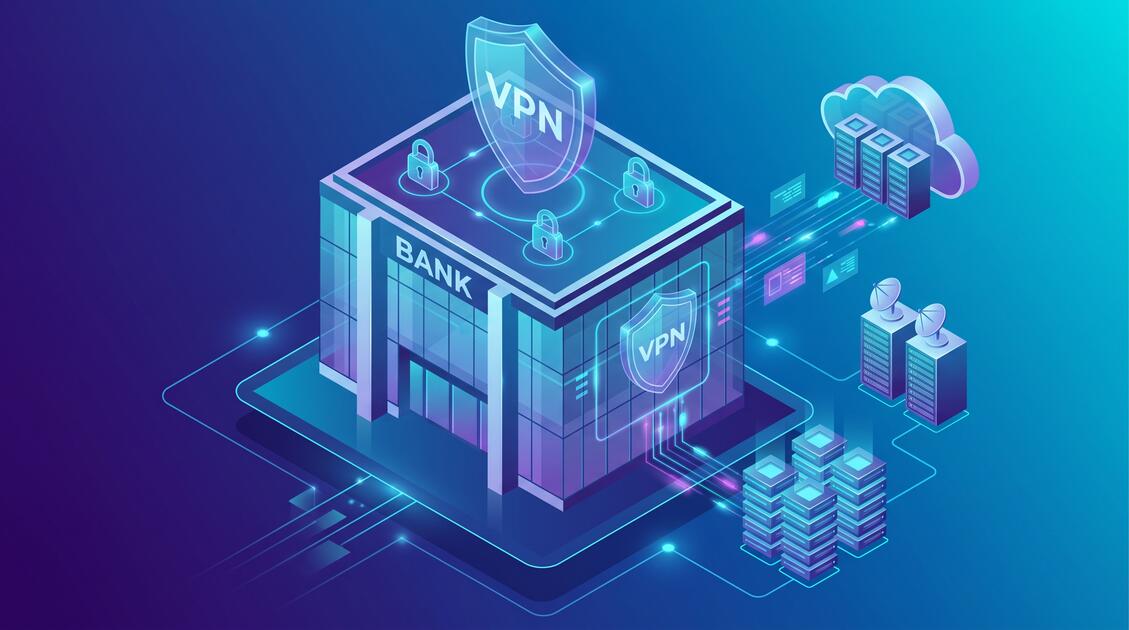
Banks and financial institutions handle some of the world's most sensitive data. Every day, they process billions of dollars in transactions, store customer financial records, and manage critical infrastructure that millions of people depend on. Yet despite these enormous responsibilities, many financial institutions still operate without comprehensive VPN protection for their internal networks, remote teams, and inter-bank communications. This vulnerability exposes customers to fraud, regulatory violations, and catastrophic data breaches. A robust VPN strategy isn't optional for banks—it's a mandatory foundation for compliance, security, and customer trust.
Why Banks Need VPN Protection
Financial institutions face a perfect storm of security challenges. They're targeted by sophisticated cybercriminals, state-sponsored actors, and insider threats. They operate across multiple countries with varying regulatory requirements. They manage legacy systems that often lack built-in security. And they must support remote teams—traders working from home, loan officers meeting clients, compliance teams reviewing transactions—all accessing sensitive systems from untrusted networks.
Without VPN protection, every employee accessing the bank's network creates a vulnerability. A trader checking market data from a coffee shop WiFi. An executive accessing account information from an airport. A developer connecting to infrastructure systems from home. Each of these represents an unencrypted connection where attackers can intercept data, steal credentials, or inject malicious code.
VPN solves this by creating an encrypted tunnel between each employee's device and the bank's infrastructure. Every packet of data is encrypted end-to-end, making it useless to attackers even if they intercept it. The bank's real IP address is hidden, preventing location tracking and targeted attacks. Network traffic passes through VPN servers before reaching the bank, adding another layer of security and preventing external reconnaissance of the bank's infrastructure.
Regulatory Requirements: PCI DSS, SOX & GLBA
Banks don't implement VPN to stay secure—they implement it to stay compliant. Multiple regulatory frameworks mandate VPN or equivalent encryption controls for financial institutions:
- PCI DSS (Payment Card Industry Data Security Standard): Requires encryption of cardholder data in transit and at rest. Banks processing credit cards must use strong encryption protocols like AES-256. VPN provides this encryption automatically for all network traffic.
- SOX (Sarbanes-Oxley Act): Mandates that public companies (including banks) maintain strict controls over financial reporting systems. VPN prevents unauthorized access to critical systems and audit trails.
- GLBA (Gramm-Leach-Bliley Act): Requires financial institutions to protect customer information and prevent unauthorized access. VPN ensures that customer data transmitted over networks is fully encrypted.
- HIPAA (for health-focused banks/lenders): Requires encryption of protected health information. VPN is the standard method of meeting this requirement.
- GDPR (for European operations): Mandates data protection and privacy controls. VPN is essential for compliance when handling European customer data.
Regulatory audits specifically check for VPN deployment. Auditors verify that VPN is mandatory for remote access, that it uses strong encryption, that it's properly logged and monitored, and that it's enforced consistently. Banks failing these checks face penalties, enforcement actions, and reputational damage.
Critical Security Threats to Bank Networks
Banks face security threats that other industries simply don't encounter:
Man-in-the-Middle (MITM) Attacks
Attackers intercept unencrypted communications between employees and bank systems, stealing credentials, account numbers, and transaction data. VPN encryption makes this attack impossible because intercepted traffic is useless without the encryption key.
Credential Theft
Attackers capture login credentials transmitted over unencrypted networks, then use them to access the bank's core systems and steal customer data. VPN prevents this by encrypting all authentication traffic.
Inter-Bank Fraud
When banks communicate with other financial institutions for fund transfers, wire instructions, or settlement, unencrypted channels create opportunities for attackers to modify instructions or redirect transfers. VPN ensures all inter-bank communications are confidential and tamper-proof.
Internal Data Exfiltration
Rogue employees or compromised workstations can exfiltrate customer data, trade secrets, or merger/acquisition information. VPN logs track all network activity, making it possible to identify suspicious data transfers.
How VPN Secures Banking Operations
VPN provides multiple layers of protection that financial institutions critically depend on:
Encryption In Transit
Every piece of data traveling through the VPN tunnel is encrypted using military-grade standards like AES-256 or ChaCha20. Customer account numbers, transaction details, employee credentials, and proprietary algorithms—all protected from interception and inspection. This encryption is transparent to users; they simply connect to VPN and work normally while their data flows through an encrypted tunnel.
Secure Remote Access
Banks employ thousands of remote workers: traders, loan officers, relationship managers, auditors, and developers. Without VPN, each of these workers represents a security risk. With VPN mandated for all remote connections, the bank controls exactly how employees access systems, enforces strong authentication, logs all activity, and can revoke access instantly if a device is compromised.
Inter-Bank Communication
Banks regularly communicate with other financial institutions for fund transfers, correspondent banking, and settlement services. VPN site-to-site connections between banks create permanent encrypted tunnels, ensuring that all inter-institutional traffic is confidential and tamper-proof. This prevents attackers from intercepting critical financial instructions.
Protection of Infrastructure Connections
Banks operate critical infrastructure: core banking systems, payment processing networks, data centers, disaster recovery sites. VPN connections between these systems prevent attackers from accessing or disrupting them. Administrators managing these systems across geographic locations use VPN to ensure their management traffic is encrypted.
Pro Tip: Zero-Trust Architecture
Leading banks now deploy VPN as part of zero-trust security architectures. Every device, regardless of location, must authenticate through VPN before accessing bank systems. Every connection is verified, logged, and monitored. VPN becomes the enforcement mechanism for the "never trust, always verify" principle.
VPN Implementation Best Practices for Banks
Deploying VPN in a financial institution requires careful planning and rigorous implementation:
1. Mandate VPN for All Remote Connections
VPN must be mandatory for every employee, contractor, and third-party vendor accessing bank systems from outside the office. No exceptions. Many breaches happen because one person was allowed to connect without VPN "just this once." Policies must be unambiguous: VPN is required, period.
2. Implement Multi-Factor Authentication (MFA) With VPN
VPN encryption alone isn't enough if attackers can steal credentials. Combine VPN with MFA—typically TOTP apps, hardware security keys, or biometric authentication. This ensures that even if credentials are somehow compromised, attackers can't connect to the VPN without also having the second factor.
3. Deploy Site-to-Site VPN for Inter-Bank Communications
Banks communicating with other financial institutions should establish permanent VPN tunnels rather than relying on public internet. These site-to-site connections encrypt all traffic flowing between banks and can be monitored with greater control than consumer VPN.
4. Implement Logging and Monitoring
VPN provides its security benefit only if you monitor what's happening through it. Banks must log all VPN connections, track data transfers, monitor for suspicious patterns, and alert on anomalies. A compromised device connecting to VPN still poses a risk if nobody's watching the logs.
5. Use Enterprise VPN Solutions With Admin Controls
Individual consumer VPN apps aren't appropriate for banks. Financial institutions need enterprise VPN solutions that provide centralized management, detailed logging, policy enforcement, and technical support. These solutions allow administrators to control VPN settings globally, manage access permissions, and enforce security policies.
6. Regularly Audit VPN Configuration and Access
VPN security degrades over time. Default configurations may become insecure. Access permissions may become outdated. Banks should conduct regular audits to verify that VPN is properly configured, that only authorized personnel have access, that encryption protocols meet current standards, and that logging is complete and tamper-proof.
7. Segment Network Access Based on Role
Not all employees need access to all systems. VPN should be configured with network segmentation, where employees can access only the systems required for their role. A customer service representative doesn't need access to the executive trading system. A developer doesn't need access to customer account data. Proper segmentation limits damage if a credential is compromised.
Did You Know?
After implementing comprehensive VPN policies, many banks report that their incident response times improve dramatically. When all network traffic is encrypted and logged through VPN, security teams can quickly trace the origin of suspicious activity and respond to threats in minutes rather than days.
Key Takeaways
- Banks face strict regulatory requirements (PCI DSS, SOX, GLBA) that VPN helps satisfy
- VPN encrypts sensitive data in transit, protecting customer information from interception
- Remote banking teams need VPN to securely access core systems from anywhere
- Inter-bank communications and fund transfers require encrypted VPN tunnels
- VPN protects against man-in-the-middle attacks on critical banking infrastructure
- Multi-layered VPN with 2FA and zero-trust architecture provides maximum security
Protecting Your Financial Institution's Future
Banks operate in a high-stakes security environment where a single breach can cost millions of dollars, expose millions of customers' financial data, and destroy trust built over decades. VPN is no longer an optional security enhancement—it's a fundamental requirement for protecting customer data, ensuring regulatory compliance, and maintaining the trust that banking depends on.
The most secure banks in 2026 are those that implement VPN as a mandatory component of their security architecture. They encrypt all remote connections. They encrypt inter-institutional communications. They log all activity. They monitor for threats. They combine VPN with strong authentication, network segmentation, and continuous monitoring. This multi-layered approach transforms VPN from a simple encryption tool into a critical component of a comprehensive security strategy.
For banks starting their VPN journey, the message is clear: make it mandatory, enforce it consistently, and combine it with other security controls. For banks already using VPN, the challenge is continuous improvement—keeping encryption protocols current, monitoring logs actively, testing access controls, and evolving your security architecture as threats change. In banking, security is never "done." It's a continuous commitment to protecting what matters most: your customers' financial information and their trust.