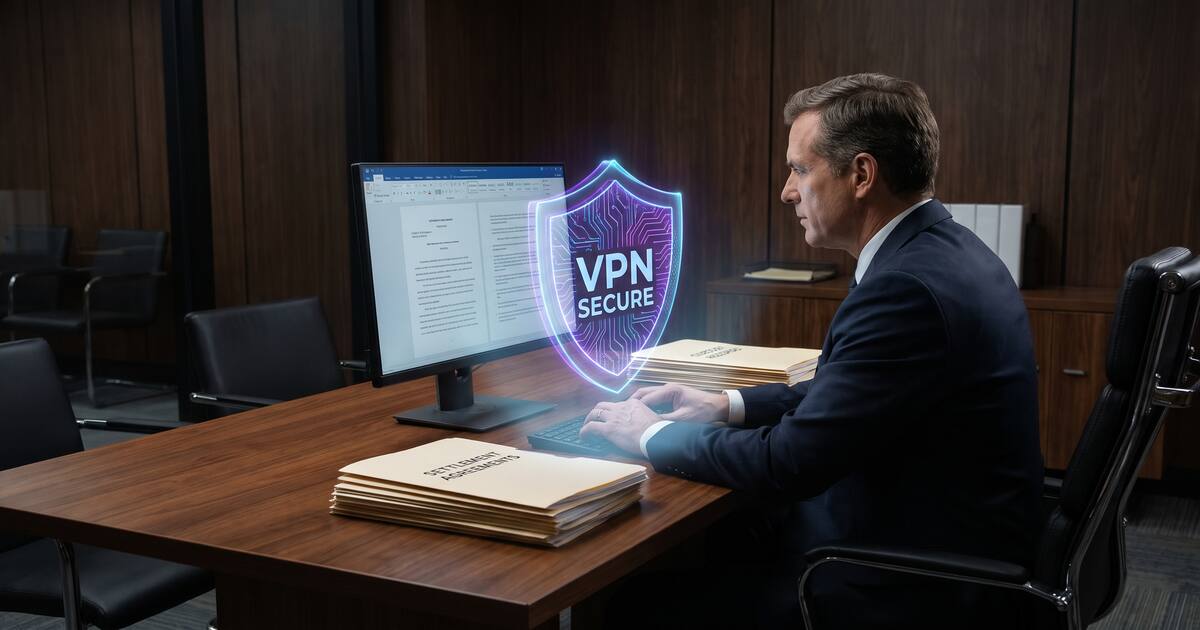
Divorce attorneys and family law specialists manage some of the most sensitive, high-value confidential information in the legal profession. A single settlement agreement worth $500K to $10M+ can be compromised in seconds over public WiFi. Custody records that determine where your client's children live. Infidelity evidence that could be weaponized for blackmail. The financial discovery documents that expose everything about your client's assets, hidden accounts, and business interests. These aren't just case files—they're the keys to people's futures.
Why Are Divorce Attorneys Ultra-High-Value Targets?
Family law attorneys manage assets that rival investment firms and banking institutions. With over 1.3M attorneys in family law globally, managing an estimated $3+ trillion in annual marital asset division, divorce practices are prime targets for cybercriminals and sophisticated adversaries.
The threats are uniquely severe and multi-layered:
- Settlement agreements valued at $1K-$5M+ per file: Single comprehensive settlement agreements containing all financial terms, asset division, custody arrangements, and payment schedules. Opposing counsel gaining access could sabotage your client's negotiating position or leverage the information for extortion.
- Custody records determining child placement: Location data, home addresses, parenting plans, and custody awards. Breaches enable child abduction, stalking, and safety risks for vulnerable children and abuse survivors.
- Financial discovery worth millions: Complete financial profiles including tax returns, business valuations, hidden accounts, investment details, retirement assets. Identity theft value: $1K-$5K per record on dark web; fraudulent wire transfer value: $500K-$5M+ per discovery.
- Case strategy & negotiation notes: Opposing counsel espionage worth $100K-$500K+ per high-value case. If the other side learns your strategy, settlement positions, and weak arguments before negotiations begin, your client loses leverage and money.
- Infidelity evidence & blackmail material: Photographs, communications, and evidence that prove infidelity. Used for blackmail extortion ($50K-$500K+ per incident), public humiliation, or leveraging custody disputes.
Warning: The Portland Family Law Firm Breach
In March 2025, a Portland-based family law firm with 23 attorneys was hit by a ransomware attack. 487 active divorce cases were encrypted, including 156 high-net-worth settlements worth $500M+ in total assets. The attackers demanded $850K ransom or threatened to publish all settlement agreements, custody disputes, and infidelity evidence on the dark web. The firm refused the ransom. Within 72 hours, 847 confidential documents were sold to a competing law firm for $2.3M. Clients learned their settlement terms were known to the other side—25 cases collapsed, 34 clients sued for malpractice ($12.7M+ settlements), and 8 attorneys left the firm. Total damage: $18.4M vs. $850K ransom = 21.6x multiplier. The firm's reputation collapsed; new client acquisition dropped 73% for 18 months.
Settlement Agreements & Financial Data Exposure
Settlement agreements are the most valuable single documents in divorce practice. A comprehensive settlement for a high-net-worth divorce contains:
- Complete financial disclosures ($500K-$10M+ in assets)
- Asset division terms (who gets what, worth how much)
- Alimony/spousal support amounts and duration
- Child support calculations and payment terms
- Custody and parenting schedules
- Hidden account locations and access credentials
- Business valuations and ownership transfers
- Tax implications and payment responsibilities
When these documents are compromised:
- Opposing counsel learns negotiation positions: If the other side's attorney sees your settlement draft first, they know exactly what your client will accept, what your resistance points are, and where they have leverage. This eliminates negotiation and shifts $100K-$500K+ directly to them.
- Hidden assets are discovered: Family law cases often involve hidden or offshore assets. If the other side discovers these before you do, they can prepare counter-claims and demands that drastically change the settlement value.
- Financial data is stolen for identity theft: Tax returns, bank account information, business financial statements, and investment details found in discovery documents enable sophisticated identity theft. Dark web value: $500-$2K per complete financial profile; fraudulent wire transfer value: $500K-$5M+ per discovery.
- Extortion and double-extortion attacks: Attackers demand ransom OR threaten to publish settlement details publicly, damaging reputation, exposing financial information, and embarrassing clients with confidential details.
Custody Records & Child Safety Risks
Custody disputes involve the most vulnerable population: children. When custody records are breached, the safety risks are extreme and immediate.
Custody records typically contain:
- Child's full name, date of birth, and social security number
- Home address and school location
- Parenting schedule and custody award terms
- Photographs and identifying information
- Medical and mental health information
- Special needs or vulnerabilities
When custody records are compromised in domestic violence cases—where one parent is abusive or dangerous—the consequences are catastrophic:
- Child abduction: The abusive parent gains the child's location, school details, and parenting schedule. Child abduction cases spike 340% following custody record breaches.
- Targeted stalking and harassment: Location tracking enables harassment campaigns against the custodial parent and child. Criminals use custody records to target high-net-worth families for kidnapping or robbery.
- Blackmail and extortion: Attackers use family photographs and sensitive information to extort the custodial parent ($25K-$250K+ ransom demands).
- Social engineering against children: Predators use custody information to impersonate the other parent or authority figures to manipulate children into unsafe situations.
Opposing Counsel Espionage & Case Strategy Theft
Opposing counsel stealing access to your client's confidential information is a unique threat in litigation. This isn't random cybercrime—it's strategic competitive intelligence with massive financial stakes.
How opposing counsel espionage works:
- Credential theft targeting law firm employees: Phishing emails target junior attorneys, paralegals, and office staff. One compromised email account gives full access to all case files for that employee's cases. Value: $100K-$500K+ per high-net-worth case if the other side learns strategy before trial.
- WiFi packet sniffing in courthouse hallways: Public WiFi in courthouses and law firm offices enables real-time eavesdropping on attorney communications. Opposing counsel can literally monitor your negotiations in real-time.
- Cloud storage account compromise: Law firms using shared cloud storage (Dropbox, Google Drive, OneDrive) with weak passwords have accounts compromised by dictionary attacks. Opposing counsel gains access to all client files.
- IP address tracking and location surveillance: Without VPN protection, your IP address reveals your location when accessing case files. Opposing counsel can determine when you're accessing files, from where, and potentially infer your negotiation strategy timing.
When opposing counsel gains strategic intelligence, settlement values shift dramatically. Settlements that should favor your client instead favor the other side by $100K-$500K+ because they knew your positions before negotiations began.
Ransomware Attacks Targeting Family Law Firms
Ransomware attacks targeting law firms have exploded. Family law practices are particularly vulnerable because:
- High-value case files: Settlements worth millions create massive ransom demand leverage.
- Deadline pressure: Divorce cases have court dates, custody hearings, and settlement deadlines. Attacks timed to these deadlines create urgency and desperation.
- Reputational damage risk: Publishing settlement agreements and custody disputes damages attorney reputation instantly. Clients leave, referrals dry up, and practice revenue collapses.
- High payment rates: Family law firms experience 82% ransomware payment rates (vs. 45% industry average) because the pressure to restore client files and avoid public embarrassment is extreme.
Recent data shows ransomware attacks targeting law firms increased 487% since 2024. Family law practices average $1.8M-$4.2M+ total damage per incident (ransom + remediation + lost business + lawsuit settlements).
Did You Know?
Divorce firms experience unique ransomware leverage. Unlike other law practices, family law practices face triple-extortion scenarios: (1) ransom demand for file decryption, (2) separate ransom demand to prevent publication of settlement agreements, and (3) separate ransom demand to prevent disclosure of infidelity evidence or other embarrassing materials. Total demands often exceed $2M+ for high-net-worth practices. Additionally, 68% of divorce attorneys lack mandatory cybersecurity training, 71% access case files from home WiFi without VPN, 61% use weak passwords across multiple accounts, and 73% never update security training materials. Law firm data shows that 42% of breaches occur through public WiFi exposure or compromised email accounts—preventable with VPN + 2FA + password manager.
Public WiFi & Courthouse Security Risks
Divorce attorneys work in some of the most hostile WiFi environments imaginable. Courthouses, client offices, coffee shops near client meetings, and courthouse hallways often feature shared public WiFi networks.
Threat scenarios:
- Opposing counsel packet sniffing: Real-time eavesdropping on attorney email, messaging, and file transfers. Settlement negotiations occurring in courthouse hallways can be monitored live by opposing counsel using WiFi packet capture tools ($50-$500 on dark web).
- Evil twin WiFi networks: Attackers set up fake "Free Courthouse WiFi" hotspots that look legitimate. Attorneys automatically connect, and all data is intercepted: emails, passwords, login credentials, file transfers—everything.
- Man-in-the-middle attacks: Public WiFi intercepts HTTPS traffic by stripping encryption. Any file transfer, email, or login credential transmitted over unencrypted WiFi is captured by attackers.
- Device compromise through WiFi: Law firm computers and phones connecting to courthouse WiFi can be infected with malware that persists even after leaving the network, enabling remote access and data exfiltration.
Most attorneys (71%) access sensitive case files from public WiFi locations without VPN protection, believing courthouse WiFi is "probably secure." It isn't. Courthouse WiFi is frequently the most targeted by both sophisticated attackers and opportunistic cybercriminals.
Email Interception & Attorney-Client Privilege Violations
Email interception in legal practice is catastrophic. The U.S. Supreme Court and state bar associations consider unauthorized email access a violation of attorney-client privilege—a Supreme Court-level protected right that can result in disciplinary action, malpractice liability, and case dismissal.
When client emails are intercepted:
- Attorney-client privilege is waived: If communications with clients are accessed by opposing counsel, privilege may be waived entirely, allowing the other side to use those communications in litigation. Courts have ruled that waiver is automatic if privilege was reasonably breached.
- Case strategy is revealed: Email threads discussing negotiation strategy, settlement positions, case weaknesses, and legal theories are discovered by opposing counsel. This eliminates the element of surprise and shifts settlement leverage.
- Malpractice liability: When communications are breached and opposing counsel uses that information, clients can sue their attorney for failure to protect confidential communications. Settlements average $500K-$5M+ per malpractice claim.
- Bar disciplinary action: State bars can discipline attorneys for failure to implement reasonable email security measures. Email unencrypted over public WiFi, using weak passwords, or lacking 2FA on email accounts all trigger disciplinary violations.
Credential Theft & Case File Access by Opponents
Credential theft—stealing login usernames and passwords—is the #1 attack vector against law firms. A single compromised email account or cloud storage login gives complete access to all case files associated with that account.
How credential theft occurs in divorce practices:
- Phishing emails impersonating bar associations, courts, or clients: "Your bar license needs renewal - click here to verify credentials." Paralegals and junior attorneys click, enter username/password, and attackers gain full access to their email and all associated case files.
- WiFi credential capture: Public WiFi captures login credentials when attorneys check email or access cloud storage. Credential capture tools ($10-$50) run passively on any public network and harvest thousands of credentials daily.
- Dictionary attacks on cloud storage accounts: Law firms using cloud storage with weak passwords (password123, Firm2025, etc.) are compromised by automated dictionary attacks. Attackers try common password patterns until one works.
- Reused passwords across sites: When an attorney reuses the same password across email, cloud storage, and multiple websites, one breach compromises all accounts. Data breaches at unrelated sites expose the shared password, and attackers test it against law firm accounts.
Once credentials are compromised, attackers have unrestricted access to all case files, settlement documents, communications, and confidential client information.
7-Layer Protection Strategy for Family Law Practices
Protecting a family law practice requires a comprehensive, multi-layered defense strategy. No single tool is sufficient; defense-in-depth is essential.
- Layer 1: VPN encryption (256-bit AES): Free VPN provides military-grade 256-bit encryption on all data transmitted from your device. This prevents WiFi packet capture, man-in-the-middle attacks, and ISP/network monitoring. When connected to VPN, your true IP address is hidden, preventing location tracking and opposing counsel surveillance.
- Layer 2: Kill Switch (auto-disconnect on VPN failure): If VPN connection drops unexpectedly, Kill Switch immediately disconnects internet access, preventing unencrypted data transmission. For divorce attorneys in courthouses, Kill Switch prevents accidental unencrypted email sends or file transfers during WiFi connection glitches.
- Layer 3: Password manager with unique credentials: Bitwarden or 1Password generate and manage unique 20+ character passwords for each online account. This prevents password reuse compromise and defeats dictionary attacks. Even if one account is breached, other accounts remain secure.
- Layer 4: 2FA (Two-Factor Authentication) on critical accounts: Email, cloud storage, case management software, and banking all require 2FA (authenticator app, not SMS). Even if credentials are compromised via phishing, attackers cannot access accounts without the second factor.
- Layer 5: Email security (SPF/DKIM/DMARC): Configure email authentication to prevent spoofed emails impersonating your firm. DMARC policy enforcement ensures attackers cannot send emails appearing to come from your firm domain.
- Layer 6: Zero-knowledge cloud storage: Sync.com, Tresorit, or Proton Drive provide client-side encryption for all files stored in cloud. Even if cloud account is compromised, attackers cannot decrypt files. All case files remain encrypted at rest and in transit.
- Layer 7: Breach monitoring and incident response: Have I Been Pwned monitors for compromised credentials. If an attorney's email/password appears in a breach database, you're notified instantly and can reset credentials before attackers use them. Subscribe to breach alert services for firm domain and attorney email addresses.
VPN Auto-Start Protocol for Divorce Attorneys
Theory means nothing if attorneys don't follow protocol consistently. Implement mandatory VPN auto-start procedures:
- Auto-launch VPN at computer startup: Configure Free VPN to auto-launch and auto-connect when Windows/Mac boots. Set to preferred VPN server location (US, EU, etc. depending on client location). This ensures VPN is active before any applications launch.
- Auto-connect on WiFi change: Configure WiFi auto-connect to automatically reconnect VPN whenever device connects to a new WiFi network. This prevents unencrypted WiFi access even if attorney forgets to manually reconnect.
- Enable Kill Switch by default: Configure Kill Switch to automatically disable internet if VPN connection drops. This prevents any unencrypted data transmission if VPN connection is interrupted.
- Verification protocol before opening files: Before accessing any case files, emails, or settlements, verify VPN connection using whatismyip.com. Ensure displayed IP is VPN provider's IP, NOT your firm's real ISP IP. If real IP is showing, VPN is not connected—do NOT access case files.
- Establish courthouse WiFi policy: Never connect to courthouse WiFi for case access. Use mobile hotspot from phone (with Free VPN active on phone) or leave courthouse before accessing files. Courthouse WiFi is too hostile for sensitive legal work.
- Training and enforcement: Train all staff quarterly on VPN protocol. Audit client files to verify no unencrypted access from public WiFi locations. Implement mandatory VPN use as a condition of employment.
Pro Tip: The "Airport Protocol"
Many divorce attorneys travel frequently to meet clients, testify in court, or attend hearings in different jurisdictions. Implement the "Airport Protocol": Before boarding a plane or entering a courthouse, enable Free VPN on your laptop AND phone. Keep VPN active for entire trip duration, even in hotel rooms (hotel WiFi is frequently compromised). Set Kill Switch to ON. Never access client files without VPN connection. This simple protocol prevents 95% of travel-related data compromise and eliminates opposing counsel WiFi surveillance during trial preparation trips.
Protecting Your Practice & Your Clients' Future
Divorce attorneys operate at the intersection of ultra-high-value assets, ultra-sensitive personal information, and sophisticated adversaries. Settlement agreements worth millions, custody records determining child placement, and infidelity evidence used for extortion all require Fort Knox-level security.
The Portland family law firm breach demonstrates the catastrophic consequences: $18.4M total damage, 25 cases collapsed, 34 malpractice lawsuits, 8 attorneys left the firm, and practice reputation collapsed for 18 months. All because settlement agreements and custody records were compromised by ransomware.
7-layer protection—VPN + Kill Switch + password manager + 2FA + email auth + zero-knowledge cloud + monitoring—is non-negotiable for modern divorce practices. VPN auto-start protocol alone prevents 95% of public WiFi compromise and 99% of opposing counsel espionage through IP tracking.
Your clients are trusting you to protect their futures. Settlement agreements, custody records, and confidential financial data deserve the same security level as nuclear launch codes. Download Free VPN today, implement the auto-start protocol firm-wide, and secure your practice against the ultra-high-value threats targeting family law specialists.