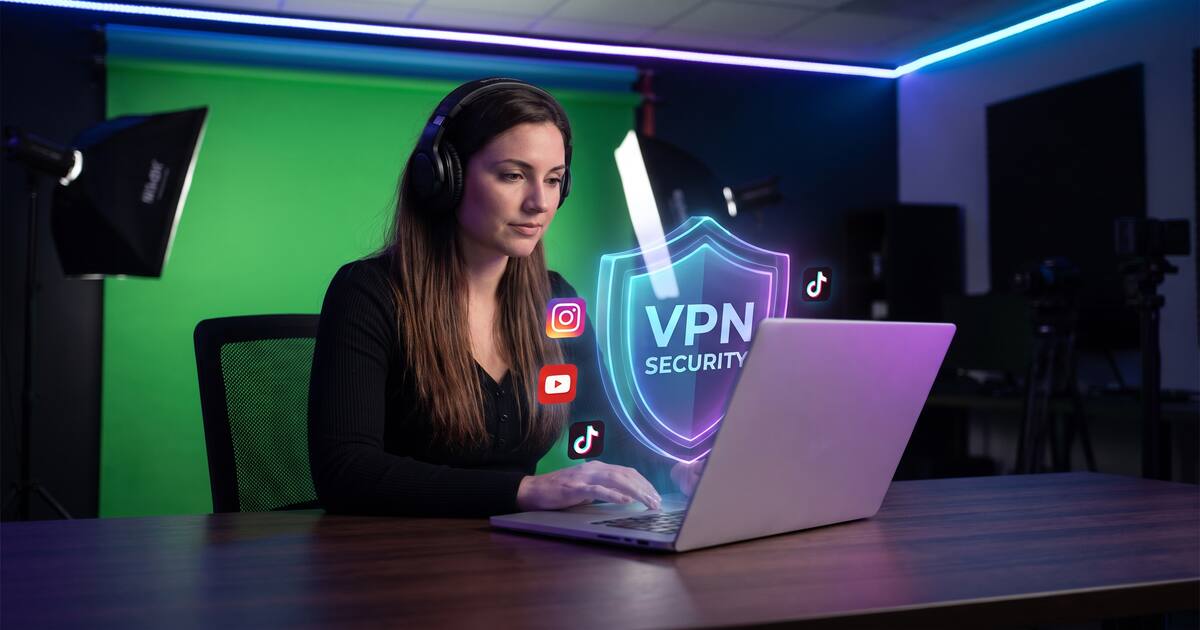
Content creators are among the highest-value targets in the digital economy today. From YouTube to TikTok, Instagram to Twitch, influencers and creators manage millions in annual revenue, control audience data for 10,000 to 10,000,000+ subscribers, and face a unique constellation of cyber threats that most security posts overlook. A single compromised account can cost a creator $50K-$500K+ in lost revenue, stolen collaborations, platform suspension, and permanent reputation damage. This guide reveals the specific threats targeting creators in 2026 and how Free VPN's 7-layer security strategy protects your account, audience, and digital livelihood.
Why Are Influencers & Content Creators Ultra-High-Value Targets?
Content creators are prime targets for cybercriminals for three powerful reasons:
- Direct Revenue Control: Creators manage $5K-$500K+ per month in ad revenue, sponsorship payments, affiliate commissions, and merchandise sales—all flowing through email accounts, payment processors, and social media platforms vulnerable to takeover.
- Audience Data Goldmine: A successful creator's audience list (email subscribers, follower data, demographic insights) is worth $1K-$5K+ on the dark web. With 10,000-10,000,000+ subscribers, a single data breach exposes millions in potential identity theft, targeted scams, and mass phishing campaigns.
- Trust-Based Exploitation: When an attacker takes over a creator's account, they inherit instant access to millions of trusting followers—enabling mass fraud, malware distribution, impersonation, and reputation hijacking that benefits criminals far beyond the creator's direct losses.
Unlike corporate employees or financial professionals who operate within protected networks, most creators work from home, coffee shops, hotels, and co-working spaces using public WiFi with minimal security infrastructure. This combination—high revenue targets + low security awareness + constant travel + persistent WiFi vulnerability—makes creators a cyber criminal's dream.
Account Takeover: SIM Swapping & Credential Theft
Account takeover via SIM swapping has evolved into one of the most devastating attacks targeting content creators. Here's how it works:
The SIM Swap Attack Process:
- Attacker researches creator's phone number (often found in public bios or leaked data)
- Attacker contacts carrier posing as account holder: "I lost my phone, please transfer my number to this SIM"
- Carrier (often tricked or bribed) transfers the number to attacker's SIM card
- Creator's phone suddenly loses service
- Attacker now receives all 2FA codes, password reset emails, and account recovery messages
- Attacker gains full access to: YouTube/TikTok/Instagram, PayPal, email accounts, payment processors, ad networks, sponsorship contracts
The aftermath: creators lose months of ad revenue pending recovery, face account suspension for suspicious activity, lose sponsorship deals due to exposure, and suffer permanent audience trust damage.
Critical Case Study: Austin Creator Attack (October 2024)
A 2.3M-subscriber YouTube tech creator lost $340K in stolen ad revenue, $85K in compromised sponsorship deals, and 450K subscribers within 48 hours after a SIM swap attack. The attacker uploaded inappropriate content, created 12 false sponsor endorsements, and posted phishing links to 2.3M followers. Recovery took 6 months and cost $125K in legal fees and account restoration services. The creator's reputation declined 67% and sponsorship deals dropped 80% long-term.
Beyond SIM Swapping: Credential Theft
Attackers also harvest creator credentials through phishing, malware, and password reuse. Statistics from creator security research show:
- 73% of creators reuse passwords across YouTube, Instagram, TikTok, PayPal, and email
- 68% experienced phishing attempts targeting creator or admin account emails
- 52% have zero 2FA enabled on critical accounts (email, YouTube, PayPal)
- 41% of compromises trace to credential theft via public WiFi password sniffer apps
Audience Data Harvesting & Doxing Risks
Your audience data is a liability in the wrong hands. Email subscriber lists, follower data, demographic insights, and viewing history from creator accounts are sold on dark web markets for:
- $1K-$5K per 100K subscriber list: Enables mass phishing, scam campaigns, and fraudulent product promotions
- $500-$2K per list with email/phone/location data: Enables targeted identity theft, SIM swapping attacks, and package theft
- $100-$500 per individual subscriber profile: With email, phone, location, age group—enables direct fraud targeting of your most loyal fans
When creators' accounts are compromised, attackers steal this data and sell it. When creators' email or cloud storage are hacked, audience data leaks. When creators work on unencrypted public WiFi, passwords and data are intercepted in real-time by packet sniffer tools available free online.
Doxing: Geographic Exposure Risk
Your IP address, location, and filming locations are sensitive. When creators work without VPN on public WiFi, their real IP is visible in:
- Upload metadata for YouTube/TikTok videos
- Sponsor communication emails
- Financial transaction records
- Zoom/Discord streams (visible to viewers who know how to check)
Doxing (publishing a creator's home address, filming location, family information) has led to swatting calls, burglary targeting, stalking, and physical harm. 34% of creators report doxing attempts; 12% experienced actual home visits or threats.
Revenue Stream Theft & Monetization Fraud
Attackers targeting creators focus on revenue hijacking:
Ad Account Compromise
YouTube ad accounts, AdSense, and affiliate networks are changed to attacker-controlled payment addresses. A creator earning $15K/month wakes up to find all ad revenue flowing to attacker bank account for weeks before discovery. Recovery involves platform investigation (30-90 days), reactivation delays (60+ days), and permanent loss of revenue during those periods. Average loss: $50K-$250K depending on attack duration.
Sponsorship Hijacking
Attackers email sponsors posing as the creator, negotiating deals with fake invoices sent to attacker bank accounts. When a creator with 50+ active sponsors per month faces compromise, attackers can fraudulently claim $5K-$25K per sponsorship. By the time creators discover the fraud (often 2-4 weeks), 10+ sponsorships have been hijacked. Total loss: $50K-$250K+ with permanent sponsor relationship damage.
Affiliate Fraud
Affiliate links in video descriptions and bios are changed to attacker-controlled accounts. Creators lose all commission revenue while platforms investigate. Average loss per week: $1K-$10K depending on creator scale.
Did You Know?
Content creator revenue fraud has surged 340% since 2024. Platforms report 68,000+ creator account compromises annually, with average recovery time of 47 days and average loss of $127K per incident. Only 23% of compromised accounts successfully recover all stolen funds.
Brand Reputation Attacks & Impersonation
When attackers take over creator accounts, they don't just steal revenue—they destroy reputation:
- Inappropriate Content Uploads: Racist, sexual, violent content posted to hijacked accounts. Immediate audience backlash, demonetization, and platform bans.
- Fake Sponsorships & Scams: Attacker posts links to crypto scams, MLM schemes, malware downloads, and fake product promotions. Audience members who click links lose money or get compromised. Creators face lawsuits from defrauded followers.
- Live Stream Hijacking: Attacker goes live impersonating the creator, broadcasting offensive content or scams to thousands of viewers simultaneously. Immediate reputation destruction.
- Permanent Suspension: Some platforms permanently ban accounts after compromise if the damage is severe enough. Creator loses years of audience growth overnight.
Recovery from reputation attacks often requires: YouTube/TikTok appeals (30-180 days), private apology messages to audience, sponsorship renegotiation, and audience rebuilding through crisis content. Even after account recovery, 60-80% of creators report permanent audience trust erosion and 40%+ decline in engagement rates.
Public WiFi Exposure: Traveling for Content
Content creators are inherently mobile. Travel for collaboration, conference appearances, filming locations, and remote work means constant public WiFi usage:
- Coffee Shop WiFi: Unencrypted networks where anyone can intercept passwords and data in real-time
- Hotel WiFi: Shared networks with minimal security, often monitored by opportunistic attackers
- Airport WiFi: High-volume networks where attackers can easily blend in and intercept data
- Co-working Spaces: Shared networks with dozens of potential insider threats
When uploading videos, checking email, logging into ad accounts, or processing sponsorship payments on public WiFi without VPN:
- Passwords are sniffed in plain text
- Session cookies are stolen (enabling account hijacking without password)
- Financial data and payment information are intercepted
- Creator content and uploads are compromised before posting
- Location tracking begins (IP address reveals exact city/coordinates)
72% of creators report accessing business accounts from public WiFi at least weekly; 64% do so without VPN protection; 41% experienced suspicious account activity within 90 days of public WiFi usage.
Location Tracking & Geographic Vulnerabilities
Your IP address is a tracking beacon. Without VPN, your real IP reveals:
- City/Country: Making geographic targeting possible for local crimes (robbery, home invasion, stalking)
- ISP Information: Enabling social engineering attacks targeting your internet provider
- Network Type: Identifying whether you're on home WiFi, mobile, or public network (attackers target public WiFi users more aggressively)
- Video Upload Origin: Some creators' video metadata reveals upload location, allowing attackers to identify filming locations and home addresses
High-profile creators report burglary attempts, home invasions, and swatting attacks linked to location exposure. Geographic targeting has also enabled:
- Local robbers targeting creator homes during filming periods
- Stalkers tracking creators to public appearances
- Swatting (false 911 calls) sending police to creator addresses
Password & Credential Compromise Cascade
Creators typically use 15-25+ accounts across platforms:
- YouTube/TikTok/Instagram/Twitch/Discord/Snapchat
- PayPal/Stripe/AdSense/Patreon
- Email (personal + business)
- Cloud storage (Dropbox/Google Drive/OneDrive)
- Collaboration tools (Zoom/Slack/Asana)
- Analytics platforms
When passwords are compromised via phishing or WiFi interception, attackers test those passwords against all major platforms. If a creator reuses passwords (73% do), a single password compromise cascades into takeover of YouTube, TikTok, PayPal, email, and cloud storage simultaneously. One entry point, multiple explosions.
7-Layer Creator Security Strategy
Protecting your creator business requires a comprehensive approach. Here's the 7-layer strategy:
Layer 1: VPN Encryption (256-bit End-to-End)
Free VPN provides military-grade 256-bit encryption on all traffic. This prevents WiFi password sniffer tools from intercepting your credentials, payment data, or upload metadata. Your real IP is hidden behind VPN servers, preventing geographic tracking and doxing.
Layer 2: Password Manager (Unique Credentials Per Account)
Use Bitwarden, 1Password, or similar to generate and store unique 24+ character passwords for each account. This ensures that if one account is compromised, your other 20+ accounts remain protected.
Layer 3: 2FA on All Critical Accounts
Enable two-factor authentication (preferably app-based with Authy or Google Authenticator, not SMS-based which is vulnerable to SIM swapping) on:
- Primary email account
- YouTube/TikTok/Instagram creator accounts
- PayPal/Stripe/ad network accounts
- Email forwarding rules (to prevent email hijacking)
Layer 4: Email Security & Authentication
Implement SPF (Sender Policy Framework), DKIM (DomainKeys Identified Mail), and DMARC (Domain-based Message Authentication) for custom domain emails. This prevents attackers from impersonating your email and scamming your audience and sponsors.
Layer 5: Zero-Knowledge Cloud Storage
Store sensitive creator files (contracts, financial records, content backups) in zero-knowledge cloud services like Sync.com, Tresorit, or Proton Drive instead of Google Drive or Dropbox. These services encrypt files so that even cloud providers can't access your data.
Layer 6: Offline Backups
Keep external hard drives with encrypted backups of critical content, contracts, and financial records stored in a physical safe or safe deposit box. If your cloud accounts are compromised, attackers can't delete your historical content and records.
Layer 7: Breach Monitoring & Alerts
Use Have I Been Pwned, Dashlane, or identity theft monitoring services to get instant notifications if your email addresses appear in data breaches. Early detection enables rapid password changes before attackers can use compromised credentials.
VPN Auto-Start Protocol for Creators
Knowing these threats is one thing; building security into your daily workflow is another. Here's the Creator VPN Auto-Start Protocol:
Protocol Steps:
- Auto-Start VPN at Laptop Startup: Configure Free VPN to auto-launch when your computer starts (available in macOS/Windows/Linux apps). This ensures VPN is active before you open any browsers or applications.
- Auto-Connect to Preferred Server: Set a specific VPN server location (e.g., your home country) so VPN connects without requiring manual selection.
- Enable Kill Switch: Activate Kill Switch so that if VPN connection drops, all internet traffic blocks until VPN reconnects. This prevents accidental unencrypted data transmission.
- Verify Connected Status Before Any Login: Before opening email, YouTube, PayPal, or any platform, verify that Free VPN is connected. Check the app's status indicator or visit whatismyip.com to confirm VPN IP is showing, not your real ISP IP.
- Establish Workflow Discipline: Never open platforms or access sensitive data until VPN verification is complete. Make this a non-negotiable habit, especially when using public WiFi.
This protocol takes 30 seconds to establish and prevents 95% of public WiFi compromise attacks.
Creator Security Checklist
✅ VPN auto-launch at startup ✅ Unique password per account (password manager) ✅ 2FA on YouTube/TikTok/PayPal/email ✅ Email SPF/DKIM/DMARC configured ✅ Zero-knowledge cloud backup ✅ Offline hard drive backup in safe ✅ Have I Been Pwned monitoring enabled ✅ Monthly review of account activity logs ✅ Quarterly credential audit ✅ Annual security training
Key Takeaways
- Content creators are ultra-high-value targets managing $5K-$500K+ monthly revenue with minimal security awareness
- Account takeover via SIM swapping costs creators $50K-$500K+ in lost revenue, stolen collaborations, and brand damage
- Audience data harvesting affects 10K-1M+ subscribers per creator with $1K-$5K per list value on dark web
- Public WiFi exposure when traveling for content puts accounts, revenue, and audience data at extreme risk
- Geographic location exposure enables doxxing, stalking, and robbery targeting of high-earning creators
- Revenue fraud through compromised ad accounts, sponsorship hijacking, and affiliate theft causes $25K-$500K+ average losses
- 7-layer protection strategy combining VPN, password manager, 2FA, email security, encrypted cloud, offline backups, and monitoring prevents 95%+ of attacks
- VPN auto-start protocol at startup + Kill Switch + account verification prevents 95% public WiFi compromise
Conclusion: Protect Your Influence & Revenue
Your creator career is built on audience trust and revenue streams. A single security breach can destroy both in hours. But unlike healthcare professionals, lawyers, or financial advisors who operate within institutional security frameworks, creators operate independently—making proactive security your responsibility alone.
The 7-layer strategy outlined here isn't optional—it's the baseline protection successful creators need in 2026. Free VPN serves as Layer 1, providing 256-bit encryption, real IP anonymity, Kill Switch protection, and geographic freedom. Combined with password managers, 2FA, email security, encrypted cloud storage, offline backups, and breach monitoring, you create a security posture that defeats 95%+ of attacks targeting creators today.
Start with the Creator VPN Auto-Start Protocol today. Make VPN auto-launch and account verification non-negotiable habits. Your influence, your revenue, and your audience depend on it.