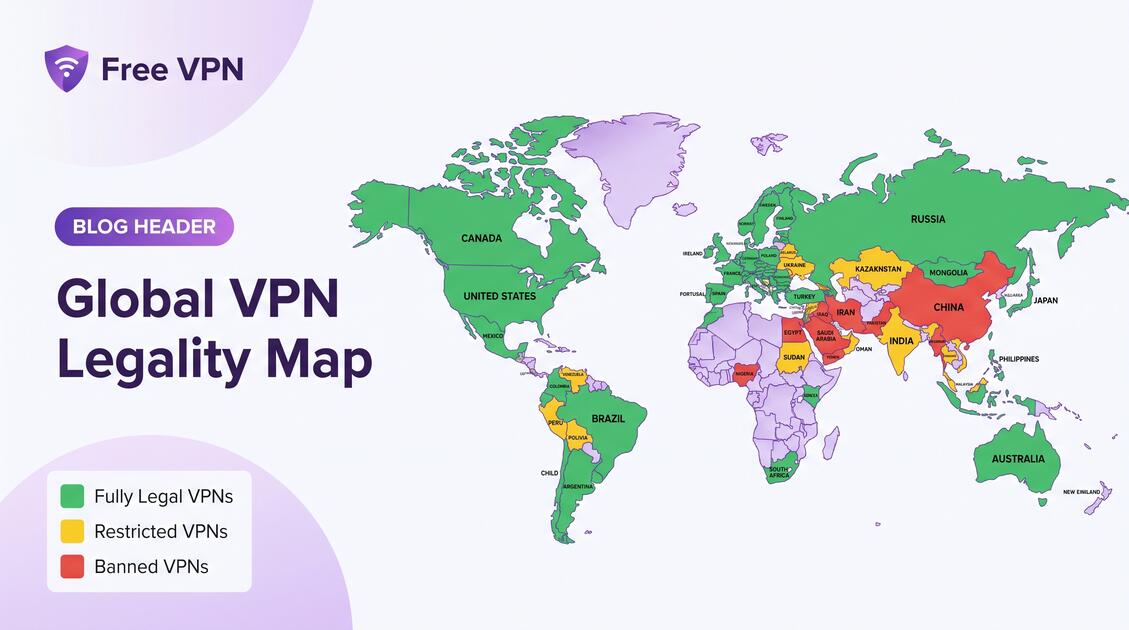
Is VPN legal? The answer depends on where you live—and where you're connecting from. While VPNs are completely legal in most democratic countries, some nations restrict them, and a handful effectively ban them altogether. If you're considering using a VPN, it's crucial to understand the legal landscape in your jurisdiction and any country you're traveling to.
Is VPN Legal? The Global Picture
The legality of VPNs varies dramatically across the globe. In Western democracies like the United States, Canada, the United Kingdom, and European Union member states, VPNs are completely legal. Citizens and businesses use them freely for privacy, security, and accessing services abroad.
However, the picture changes in countries with stricter government control. Some nations require VPN licensing or government approval. Others have effectively banned them to prevent citizens from bypassing censorship and surveillance. Understanding your jurisdiction's VPN laws is essential before you connect—especially when traveling internationally.
Key Distinction
Using a VPN for legitimate privacy and security is legal almost everywhere. Using a VPN to bypass local laws (like accessing restricted content in jurisdictions where it's prohibited, or evading taxes) remains illegal, regardless of VPN laws.
Countries Where VPNs Are Fully Legal
The vast majority of the world's population lives in countries where VPNs are completely legal and unregulated:
- North America: United States, Canada, Mexico
- Europe: All EU member states (Germany, France, UK, Spain, Italy, Netherlands, etc.)
- Asia-Pacific: Australia, New Zealand, Japan, Singapore, South Korea, Thailand, Taiwan
- South America: Brazil, Argentina, Chile, Colombia
- Middle East & Africa: Israel, UAE, South Africa
In these countries, you can use Free VPN without legal concerns. VPNs are protected as a privacy tool, and businesses regularly use VPNs for secure remote work and network security. Schools and universities offer VPN access to students for research purposes.
Countries With VPN Restrictions
Some countries don't outright ban VPNs but impose significant restrictions, licensing requirements, or make their use legally ambiguous:
- China: VPNs are heavily restricted and technically blocked. While not explicitly illegal, unauthorized VPN use can result in penalties. The government requires VPN licensing and only approves government-vetted VPN providers.
- Russia: VPN usage is restricted. In 2017, Russia passed laws making it illegal to use VPNs to access banned websites. ISPs are required to block VPN services. Using a VPN to circumvent government censorship is technically illegal.
- India: VPN usage is legal, but ISPs are increasingly required to log VPN users. A 2022 law requires platforms to cooperate with law enforcement. Using a VPN doesn't violate the law, but activity through the VPN remains subject to local laws.
- Indonesia: VPNs are technically legal but heavily restricted. ISPs are required to monitor and block VPN traffic. Using a VPN to access blocked sites can result in fines.
- Vietnam: VPN usage is restricted. While not explicitly banned, unauthorized VPN use can result in fines. The government blocks VPN services and requires licensing for businesses.
- UAE: VPNs are legal but regulated. Using a VPN to mask illegal activity is prohibited. Many VPN services are blocked by ISPs, and unauthorized VPN usage can trigger fines.
Countries Where VPNs Are Banned or Heavily Restricted
A small number of countries have effectively banned VPN usage or made it illegal for civilians:
- Iran: VPNs are effectively banned for civilians without government permission. The government blocks VPN services at the ISP level and has criminalized unauthorized VPN use.
- North Korea: VPNs are banned. Only government-approved internet access is permitted. Using a VPN is considered a serious crime.
- Turkmenistan: VPNs are effectively banned. The government controls all internet access and criminalizes VPN usage.
- Syria: VPN regulations are unclear, and the government has been reported blocking VPN services. Using a VPN to evade government censorship is dangerous and potentially illegal.
Travel Safety Warning
If you're traveling to countries where VPNs are restricted or banned, disconnect your VPN before arrival. Having a VPN installed and configured at border checkpoints—especially in authoritarian countries—can raise suspicion and lead to confiscation of devices or legal consequences. Always research VPN laws before crossing international borders.
Legal Implications for VPN Users
Even in countries where VPNs are legal, important nuances exist:
Legality vs. Activity
Using a VPN is legal, but your activity through the VPN isn't exempt from local laws. If you access pirated content, engage in fraud, or bypass copyright protections, the VPN doesn't protect you legally. ISPs and law enforcement can subpoena VPN providers for user information, especially in countries with data retention laws and treaties.
Terms of Service
Even Free VPN's use is governed by terms of service. You cannot use VPN to commit crimes, violate intellectual property laws, or engage in activities explicitly prohibited by your country's laws. Using a VPN doesn't change your legal obligations.
Employer Policies
Your employer can prohibit VPN usage on their networks, even if VPNs are legal nationwide. Many corporations block VPNs to enforce security policies and prevent data leakage.
How to Use VPN Responsibly
Understanding VPN legality is the first step. Here's how to use VPN responsibly and safely:
- Check Your Jurisdiction: Research VPN laws where you live and any country you're visiting. Don't assume global standards apply everywhere.
- Use VPN for Legitimate Privacy: VPNs exist to protect your data, encrypt your connection, and safeguard your privacy. This is fully legal and ethical.
- Never Use VPN to Break Laws: Your VPN doesn't exempt you from local laws. Accessing pirated content, committing fraud, or violating copyright laws remains illegal, regardless of VPN use.
- Choose a Trustworthy VPN: Use established, transparent VPN providers like Free VPN that don't log your activity and maintain clear privacy policies.
- Disable VPN at Borders: If traveling to restricted countries, disconnect your VPN before crossing borders. Having a VPN configured during security checks can raise suspicion.
- Understand Your VPN Provider's Policy: Read the terms of service. Reputable VPNs cooperate with law enforcement when required by law, so illegal activity can still be traced.
Key Takeaways
- VPNs are legal in most democratic countries, including the US, Canada, UK, Australia, and EU nations
- Some countries restrict VPN usage through licensing requirements or ISP blocking, including Russia, China, and some Middle Eastern nations
- A small number of countries effectively ban VPNs entirely or criminalize their use without government approval, like North Korea, Iran, and Turkmenistan
- Using a VPN for legitimate privacy and security is legal in most places, but using it to break local laws remains illegal
- Always research VPN laws in your country and destination before traveling to understand your rights and responsibilities
- VPN restrictions often target surveillance circumvention, not the technology itself—understand your jurisdiction
Your VPN, Your Responsibility
VPNs are a powerful tool for privacy and security, but they come with responsibility. In most of the world, VPNs are completely legal and widely used by individuals, businesses, and organizations. However, understanding the legal landscape in your jurisdiction is essential—especially if you travel internationally.
The key principle is simple: use VPN for legitimate privacy protection, not to break laws. A trustworthy VPN like Free VPN protects your data and encrypts your connection legally and ethically. Before you connect, research your local VPN laws and commit to using VPN responsibly. Your privacy matters, and so does doing it the right way.