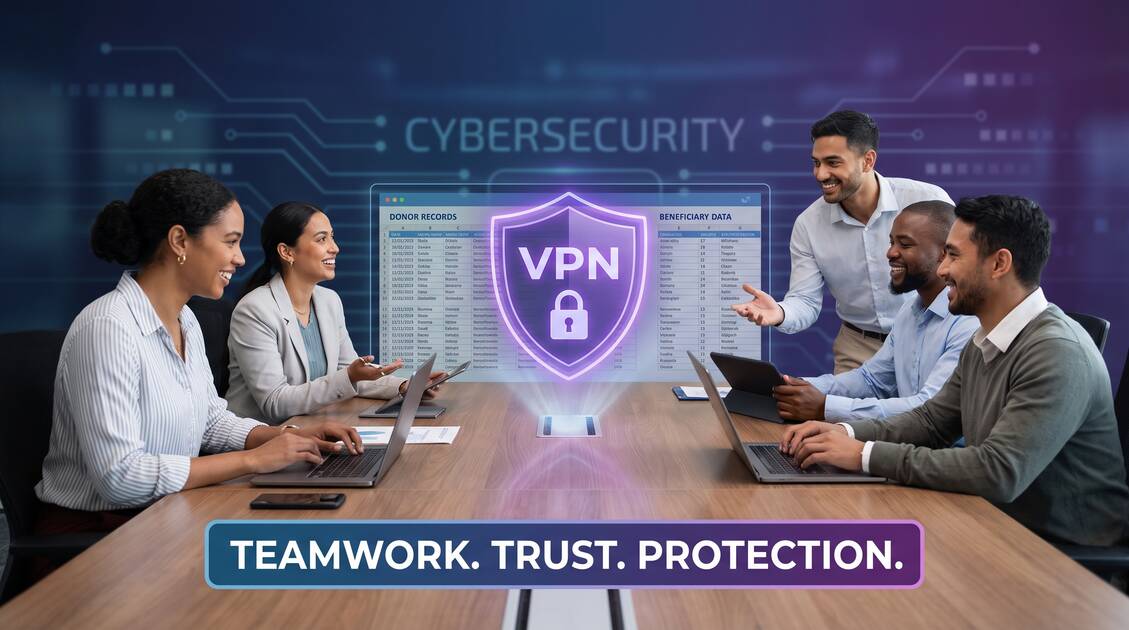
Nonprofits and charities operate on the front lines of social good—serving vulnerable populations, managing limited budgets, and trusting their teams implicitly. But this mission-driven nature creates a critical security vulnerability: nonprofits hold extraordinarily sensitive data (beneficiary information, medical records, donor identities, and financial records) on networks that often lack enterprise-level protection. The result? Nonprofits have become prime targets for ransomware attacks, with attackers exploiting their unique pressure point: they cannot afford to pause services to vulnerable populations, making them more likely to pay ransom quickly. In 2026, nonprofits face a security crisis that threatens their mission, their donors' trust, and the communities they serve.
Why Nonprofits & Charities Are Prime Ransomware Targets
Nonprofits represent the perfect ransomware target—and attackers know it. Here's why:
- Mission-critical pressure: Unlike for-profit businesses, nonprofits cannot simply pause operations. Food banks must distribute meals, homeless shelters must house people, medical clinics must treat patients. Attackers exploit this moral pressure, knowing nonprofits will prioritize service continuity over security.
- Limited IT budgets: Most nonprofits allocate 2-5% of budgets to IT, compared to 15%+ for comparable commercial organizations. Security often takes a backseat to mission delivery.
- Trust-based culture: Nonprofits operate on trust—staff trust each other, beneficiaries trust the organization, donors trust their contributions are secure. This creates a culture less vigilant about cybersecurity best practices.
- Ransomware attack increase: Ransomware targeting nonprofits increased 250%+ since 2023. Average ransom demands: $40K-$200K, with some reaching $500K+.
- High-value data: Beneficiary medical records, donor identities, financial information, and government contracts represent premium data on dark markets ($15,000-$100,000+ per organization depending on beneficiary population size).
Ransomware Reality Check
In 2024, a major homeless services nonprofit paid $180K ransom after attackers encrypted shelter management systems. For 72 hours, they couldn't process bed assignments, check beneficiary medical histories, or process donations—directly harming the people they serve.
Sensitive Data at Risk in Nonprofits
Nonprofits and charities protect data that attackers weaponize in multiple ways:
- Beneficiary personal information: Names, addresses, SSNs, phone numbers—weaponizable for identity theft, harassment, and targeting vulnerable populations.
- Medical & mental health records: For health-focused nonprofits (mental health charities, addiction treatment centers, HIV clinics). These records are worth $250-$1,000+ per person on dark markets due to sensitivity and potential for blackmail/harassment.
- Donor identities & giving history: Attackers can blackmail donors, impersonate the nonprofit for fraudulent fundraising, or target donors for phishing attacks.
- Financial records: Bank account information, payment processing details, grant funding sources, and financial audits.
- Government contracts & sensitive agreements: Many nonprofits execute government contracts with confidential terms, compliance requirements, and performance metrics.
- Volunteer information: Background checks, personal details, emergency contacts—valuable for identity theft and targeted attacks.
- Grant information: Unpublished grant proposals, funding sources, and strategic plans—exploitable for competitive disadvantage against other nonprofits seeking the same funding.
Real-World Breach: Planned Parenthood (2021)
Attackers breached Planned Parenthood affiliate systems and encrypted patient medical records. While the organization refused to pay ransom, they experienced weeks of service disruptions, and hundreds of patients' sensitive reproductive health data was exposed on dark web forums.
Legal & Compliance Obligations for Nonprofits
Nonprofits must comply with multiple regulatory frameworks protecting beneficiary and donor data:
- HIPAA (Health Insurance Portability & Accountability Act): If your nonprofit provides healthcare (clinics, mental health services, substance abuse treatment), you must comply with HIPAA's encryption and security requirements. Violations carry fines up to $1.5M+ per year.
- State charity regulations: Most states require nonprofits to protect donor data and disclose security breaches. Some states mandate specific security controls for nonprofits handling sensitive information.
- Donor privacy expectations: Donors expect their contributions and identity information to be protected. A data breach directly harms your nonprofit's reputation and future fundraising.
- Grant funder requirements: Government agencies and foundations providing grants often require nonprofits to implement specific security controls, including encrypted communication and secure data handling.
- IRS expectations: While the IRS doesn't directly regulate nonprofit cybersecurity, data breaches can trigger IRS inquiries and impact tax-exempt status if the organization fails to demonstrate adequate safeguards.
- Beneficiary protection laws: Depending on your nonprofit's mission (child services, domestic violence shelters, immigrant services), you may face additional legal obligations to protect beneficiary confidentiality and safety.
Pro Tip: Document Your Security Efforts
Implementing a VPN and maintaining security logs demonstrates to donors, grantmakers, and regulators that your nonprofit takes data protection seriously. Keep documentation of your security measures—VPN usage, encryption, access controls—to show due diligence in the event of a breach investigation.
Digital Threats Nonprofits Face Daily
Nonprofits encounter specific digital threats that exploit their operational model and limited security infrastructure:
- Public WiFi interception: Many nonprofits operate from community centers, partner facilities, and remote locations. Staff accessing beneficiary databases on unencrypted public WiFi exposes data to MITM (man-in-the-middle) attacks.
- Email compromise: Attackers target nonprofit staff (especially finance and leadership) with phishing emails spoofing donors, grantmakers, or government agencies. A compromised email account can lead to donation redirection or ransomware deployment.
- Cloud misconfiguration: Many nonprofits use free/cheap cloud storage (Google Drive, Dropbox, OneDrive). Misconfigured permissions expose beneficiary data, donor lists, and financial records to the public internet.
- Ransomware delivery: Attackers use email attachments, malicious links, and watering hole attacks targeting nonprofit websites and portals to deploy ransomware.
- Mobile device theft: Staff working remotely often carry laptops and phones with unencrypted sensitive data. A stolen device gives attackers direct access to beneficiary and donor information.
- Third-party breaches: Nonprofits often integrate with third-party vendors (payment processors, volunteer management platforms, grant databases). A breach at a vendor exposes nonprofit data.
- Insider threats: While rare, disgruntled staff can exfiltrate beneficiary data or volunteer access to attackers.
Ransomware Targeting: The Nonprofit Crisis
Ransomware represents the existential threat to nonprofits in 2026. Here's the scale of the crisis:
- Attack frequency: Ransomware targeting nonprofits increased 250%+ since 2023. In 2025 alone, over 800 nonprofits publicly disclosed ransomware incidents.
- Ransom amounts: Average nonprofit ransom: $40K-$200K. Larger nonprofits with government contracts or major donors face demands of $500K+.
- Double-extortion strategy: Modern ransomware includes double extortion—attackers encrypt your data AND threaten to sell it to competitors or publish it publicly if you don't pay. For nonprofits, the threat of publishing beneficiary or donor data creates extreme pressure to pay.
- Business continuity pressure: Unlike businesses that can pause operations temporarily, nonprofits face impossible choices: pay ransom to restore services to vulnerable populations, or let people suffer.
- Long-term impact: Even after paying ransom, nonprofits face months of recovery, reputation damage, and donor loss. Many nonprofits close after major ransomware incidents.
Mobile & Remote Work Risks for Nonprofit Staff
The typical nonprofit work pattern creates severe security vulnerabilities:
- Home office WiFi: Many nonprofit staff work from home on personal WiFi networks without proper security configurations. Home routers often lack encryption and are vulnerable to compromise.
- Community partner sites: Program staff working at community centers, schools, libraries, and partner facilities connect to public WiFi to enter beneficiary data or process donations.
- Grant meetings & conferences: Leadership attending funder meetings, conferences, and networking events work on hotel WiFi and airport networks—prime MITM attack scenarios.
- Volunteer locations: Many nonprofits coordinate volunteers remotely. Volunteers accessing their personal accounts to view assignments or report hours creates WiFi exposure across multiple uncontrolled networks.
- Mobile device usage: Staff using smartphones to check emails, access cloud storage, or manage social media on public networks exposes organizational accounts to compromise.
- Credential caching: Many devices cache credentials for auto-login. An unsecured WiFi connection allows attackers to intercept cached credentials and gain persistent access to organizational systems.
How VPN Protects Nonprofit Operations
A VPN provides critical protection specifically designed for nonprofits' distributed work model:
- Encryption: All data traveling between staff devices and the internet is encrypted end-to-end. Even if an attacker intercepts the connection, they cannot read beneficiary records, donor information, or financial data.
- Public WiFi wrapping: VPN encrypts all traffic on any network—home WiFi, coffee shop WiFi, hotel WiFi, community center WiFi. Staff can safely access beneficiary databases from anywhere without MITM risk.
- IP masking: Your real IP address is hidden, preventing attackers from targeting your organization's network directly. This makes your nonprofit a less attractive target.
- DNS privacy: VPN routes DNS queries through encrypted tunnels, preventing ISPs and network administrators from seeing which websites or services your nonprofit accesses. This protects against DNS-based attacks and snooping.
- MITM prevention: By encrypting all traffic, VPN prevents man-in-the-middle attacks targeting nonprofit communications, email, and data transfers.
- Compliance documentation: Using a VPN creates audit logs showing your nonprofit is implementing security best practices. This documentation helps with regulatory compliance, grantmaker requirements, and donor confidence.
Building a 7-Layer Security Strategy for Nonprofits
VPN is Layer 1 of a comprehensive security strategy:
- Layer 1 – Always-On VPN: Implement free VPN like Free VPN with auto-connect. Staff never connects to unencrypted networks. VPN is always active, regardless of network.
- Layer 2 – Device encryption: Enable full-disk encryption on all staff devices (Windows BitLocker, Mac FileVault, Android device encryption). If a device is stolen, data remains protected.
- Layer 3 – Multi-factor authentication (MFA): Require MFA on all nonprofit systems and email. Even if an attacker obtains credentials, they cannot access accounts without a second factor.
- Layer 4 – Secure communications: Use encrypted email (ProtonMail or similar) for sensitive communications. Ensure video calls use platforms with end-to-end encryption (Signal, Jitsi, or secure video conferencing tools).
- Layer 5 – Data access controls: Implement principle of least privilege—staff only access data necessary for their role. Use cloud storage with fine-grained permission controls. Regular access reviews remove unnecessary permissions.
- Layer 6 – Monitoring & logging: Log all access to beneficiary data, donor records, and financial systems. Monitor for suspicious access patterns. Quarterly reviews identify unauthorized access.
- Layer 7 – Incident response & backups: Maintain offline backups of critical data (beneficiary databases, financial records). Develop an incident response plan. Regular backup testing ensures you can recover from ransomware without paying ransom.
The Backup Advantage
Organizations with current offline backups can refuse ransomware payments entirely—they simply restore from backup. Nonprofit that invests in VPN + backups eliminates 90% of ransomware risk while showing regulators they have comprehensive security.
Protecting Your Nonprofit's Mission & Trust
Your nonprofit's greatest asset isn't your funding, your staff, or your facilities—it's your reputation and the trust of your donors, beneficiaries, and community partners. A single data breach destroys that trust, generates legal liability, and can force your nonprofit to close.
But protection is achievable, even with limited budgets. A free VPN like Free VPN costs nothing and provides immediate protection against 80% of nonprofit data breaches. Combined with basic device encryption, MFA, and regular backups, you've built a security posture that rivals much larger organizations—at zero cost.
The question isn't whether you can afford security—it's whether you can afford not to. Implement VPN today. Your beneficiaries, donors, and mission depend on it.
Key Takeaways
- Nonprofits are prime ransomware targets due to limited IT budgets, mission-critical operations, and high payment pressure during service disruptions
- Sensitive data at risk includes beneficiary personal info, medical/mental health records, donor identities, financial records, volunteer data, and grant information
- Nonprofits must comply with state charity regulations, donor privacy expectations, beneficiary protection laws (HIPAA for healthcare nonprofits), and data protection standards
- Digital threats include public WiFi interception at community centers, email compromise targeting donations, cloud misconfiguration, ransomware with double-extortion targeting donor lists, and third-party breaches
- Ransomware targeting nonprofits increased 250%+ since 2023, with average ransom $40K-$200K, exploiting mission-critical pressure (services to vulnerable populations cannot pause)
- Remote/mobile work at home offices, community partner sites, grant meetings, and volunteer locations creates significant WiFi exposure without VPN
- VPN protects through encryption, public WiFi wrapping, IP masking, DNS privacy, MITM prevention, and compliance documentation for donors and regulators
- A 7-layer security strategy combines: Layer 1 always-on VPN, Layer 2 device encryption, Layer 3 MFA, Layer 4 secure comms, Layer 5 data access controls, Layer 6 monitoring/logging, Layer 7 incident response/backups
- VPN is cost-effective protection for nonprofits with budget constraints, protecting the mission, building donor confidence, and preventing service disruptions that harm beneficiaries