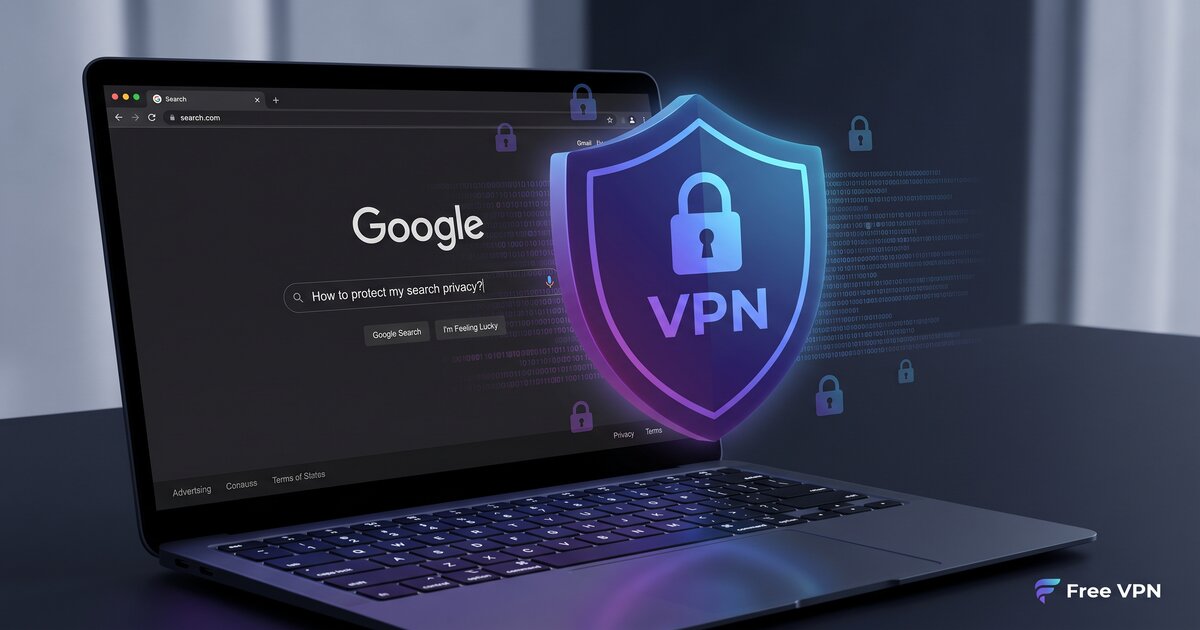
Every search you perform reveals intimate details about your thoughts, concerns, health, finances, and beliefs. Whether you're searching for medical symptoms, relationship advice, or controversial topics, your search history tells a complete story about who you are. But you're not alone in seeing it—search engines, ISPs, data brokers, and hackers are all watching.
In 2026, protecting your search privacy is more critical than ever. Google alone processes over 8.5 billion searches per day, creating detailed profiles on billions of users. Meanwhile, your ISP silently monitors every query you type. The good news? A VPN can encrypt your searches and keep them private from ISPs, hackers, and corporate snoops. Let's explore how your searches are tracked and how to reclaim your search privacy.
How Your Searches Are Tracked
Your search queries are vulnerable at multiple points in your internet connection. Here's how the tracking happens:
Search Engine Tracking
Google, Bing, and other search engines track every query you perform. They link your searches to your IP address and any Google accounts you're logged into, building comprehensive profiles over years. These profiles include your location, device type, operating system, browsing history, and even the time of day you search for specific topics.
ISP Monitoring
Your Internet Service Provider can see the domain names you visit, including search engine queries. Even without VPN protection, most search queries contain sensitive information in the URL itself. For example, a search for "depression support groups" is visible to your ISP in plain text.
Network Eavesdropping
On public WiFi networks, hackers can intercept unencrypted traffic and see your search queries in real-time. Coffee shop WiFi, airport networks, and hotel connections are particularly vulnerable to this type of surveillance.
Warning: HTTPS Doesn't Protect Your Searches
While HTTPS encrypts the content of search results, your ISP can still see the domain name (e.g., "google.com") and can often infer what you're searching for based on your behavior patterns.
Search Engine Profiling & Data Collection
Google's business model depends on collecting and analyzing search data. Here's what Google knows about you:
- Search History: Every query you've ever performed, linked to your account and IP address
- Location History: Where you were when you performed each search
- Device Information: What devices you use, their operating systems, and unique identifiers
- Behavioral Patterns: When you search, how quickly you click results, how long you stay on pages
- Personal Interests: Your health concerns, financial situation, political views, relationship status
- Ad Preferences: Your estimated income, age group, marital status, and purchasing habits
This data is incredibly valuable to advertisers. When you search for "arthritis pain relief," companies selling arthritis products are ready to bid for your attention. When you search for "divorce lawyers," law firms will target you with ads for months.
Did You Know?
Google's search algorithm considers over 200 ranking factors, many of which are based on user behavior data they collect from your searches and browsing history.
Your ISP Can See Your Searches
Your Internet Service Provider has a unique position in your internet connection. They control the infrastructure you use to access the internet, which means they can see:
- Search Queries in URLs: Unencrypted search queries visible in the domain name
- Search Timing: When you search and how often
- Search Patterns: Correlations between searches that reveal your interests and concerns
- Location: Your IP address reveals your approximate location
ISPs in the United States and many other countries are legally permitted to collect and sell this data to third parties. In 2016, the FCC ruled that ISPs can monitor and monetize user behavior, leading many major ISPs to establish "advertising" divisions dedicated to selling customer data.
Data Brokers & Search History Sales
Data brokers are companies that collect, aggregate, and sell personal information. They purchase search data from ISPs, advertisers, and other sources, then package it for sale to anyone willing to pay.
Your search history can be sold to:
- Advertisers: Companies targeting you with ads based on your searches
- Insurance Companies: Insurance firms analyzing your health-related searches to assess risk
- Employers: Hiring managers investigating candidates before hiring
- Lenders: Banks and credit card companies assessing financial risk based on your searches
- Researchers: Companies studying consumer behavior and trends
- Government Agencies: Law enforcement and intelligence services in some jurisdictions
Pro Tip
Search data is worth more than you might think. A single person's complete search history can sell for $50-100+ on the dark web, depending on their demographic and detailed personal information included.
How VPN Protects Your Search Privacy
A VPN encrypts your internet traffic and routes it through secure servers, providing multiple layers of protection for your searches:
Encryption Hides Your Searches
VPN encryption makes your search queries unreadable to your ISP, network administrators, and hackers. Even if someone intercepts your traffic, they'll see only encrypted data, not your actual searches.
IP Address Masking
VPN hides your real IP address and location. Search engines and websites see the VPN server's address instead of yours, making it much harder to correlate searches with your identity.
ISP Blocking
Your ISP cannot see which websites you visit or which searches you perform when you use VPN. They can only see that you're using a VPN, not the destinations or content of your traffic.
Protection on Public WiFi
VPN encrypts your searches even on unsecured public WiFi networks, preventing local network hackers from intercepting your queries.
Anonymous Search Engines & Tools
While VPN protects your searches from ISPs and network snoops, the search engine itself can still track you. For maximum privacy, combine VPN with anonymous search engines:
DuckDuckGo
DuckDuckGo is a privacy-focused search engine that doesn't track your searches, doesn't store your IP address, and doesn't create profiles about you. They make money through private advertisements instead of targeted ads based on your data.
Brave Search
Brave Search is a private search engine built into the Brave browser. It offers anonymous search results without tracking your behavior or personal information.
Searx and SearxNG
Searx and SearxNG are open-source metasearch engines that aggregate results from other search engines while preserving your privacy. They don't store IP addresses, queries, or user data.
Qwant
Qwant is a European search engine that respects privacy and doesn't track user behavior. It's compliant with GDPR and doesn't sell data to third parties.
Search Privacy Best Practices
Protecting your search privacy requires a multi-layered approach combining VPN, anonymous search engines, and additional privacy practices:
- Always Use VPN: Enable VPN before performing any searches to hide your traffic from ISPs and hackers
- Choose Anonymous Search Engines: Replace Google with DuckDuckGo, Brave Search, or Qwant
- Clear Search History: Regularly clear your browser search history and cookies
- Disable Search History: Turn off search history in your browser and search engine settings
- Use Private Browsing: Use incognito or private browsing mode when searching for sensitive topics
- Disable Autocomplete: Turn off search suggestions to prevent them from being stored
- Use DNS Privacy: Enable DNS-over-HTTPS (DoH) or DNS-over-TLS (DoT) for additional encryption
- Vary Your Search Terms: Avoid repetitive searches that create obvious patterns
Key Takeaways
- Search engines like Google create detailed profiles of you based on every search you perform
- Your ISP can see all unencrypted search queries, even if you use private browsing
- Data brokers purchase and resell your search history for targeted advertising and manipulation
- VPN encrypts your internet traffic, hiding your searches from ISPs, hackers, and snoops
- Anonymous search engines like DuckDuckGo and Brave Search don't track or profile you
- Combine VPN with anonymous search engines and DNS privacy for maximum search protection
Reclaim Your Search Privacy Today
Your search history is one of the most personal data points about you. It reveals your health concerns, financial worries, relationship problems, political beliefs, and intimate thoughts. Protecting it should be a priority.
The combination of Free VPN and an anonymous search engine like DuckDuckGo provides comprehensive protection for your search privacy. VPN hides your queries from your ISP and hackers, while an anonymous search engine ensures the search engine itself doesn't build a profile about you.
Start protecting your search privacy today. Download Free VPN, switch to DuckDuckGo, and reclaim control over your personal information. Your searches deserve to be private.