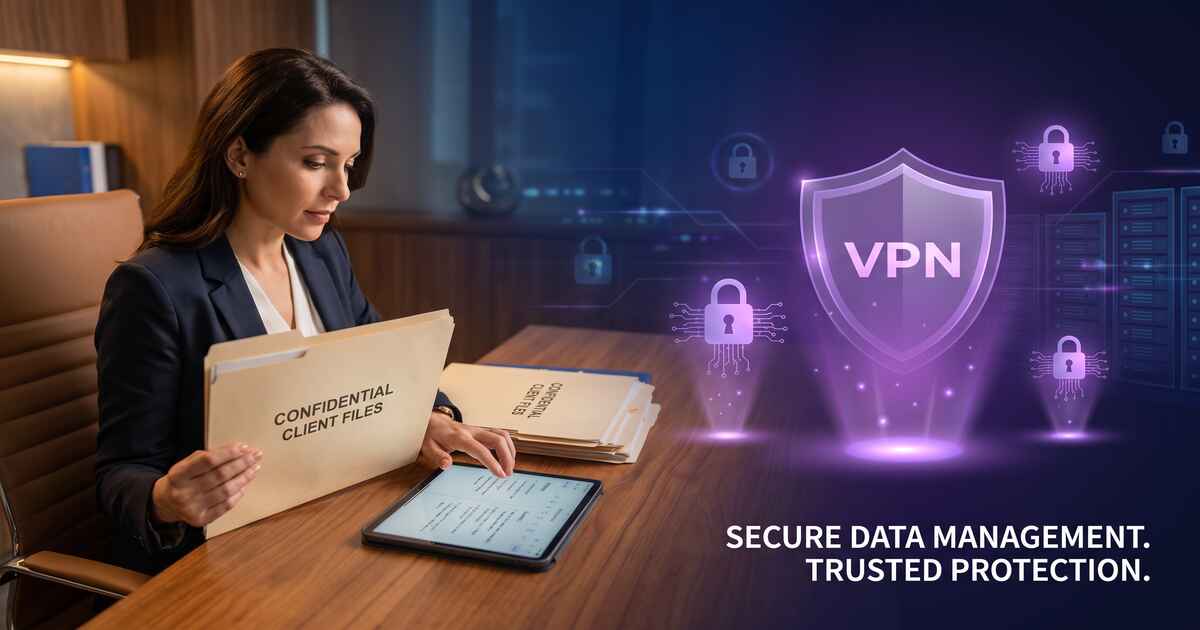
Social workers and counselors are guardians of our most vulnerable populations. But they're also custodians of some of the most sensitive personal data in existence—abuse histories, family secrets, mental health information, substance abuse records, government benefits data, criminal histories, and victim identities. This confidential information is worth thousands of dollars per victim on the dark web, making social workers and social service agencies prime targets for ransomware, data theft, and corporate espionage. The stakes are uniquely high: a breach doesn't just expose a client's data—it can endanger their safety, destroy therapeutic relationships, disrupt critical services to vulnerable populations, and fundamentally betray the trust upon which effective social work depends.
Why Social Workers & Counselors Are Vulnerable
Social workers face a perfect storm of security challenges. First, the data they handle is extraordinarily sensitive and high-value. A single client case file—containing abuse history, family details, mental health diagnoses, substance abuse records, and government benefits information—can be worth $500-$2,000+ per victim on the dark web. For a social worker managing 30-50 active cases, that represents $15,000-$100,000+ in potential data value.
Second, social work is inherently mobile and field-based. Unlike therapists who work primarily from secure offices, social workers conduct home visits, investigations, emergency interventions, and client meetings across diverse locations. They access case files from their cars, coffee shops, client homes, agency field offices, and personal residences. Each of these locations introduces security vulnerability: public WiFi networks without VPN protection expose unencrypted case data to interception.
Third, social service agencies have notoriously limited IT budgets. Most agencies allocate only 2-5% of their budgets to technology, compared to 15%+ for comparable businesses. This means many social service organizations operate with outdated security infrastructure, minimal staff training, no cybersecurity insurance, and no incident response plans. Ransomware attackers deliberately target organizations with these characteristics because they know payment likelihood is high—social services can't pause operations to vulnerable populations, creating extreme time-critical pressure.
Fourth, ransomware targeting social services increased 250%+ since 2023. The average ransom demand is $50,000-$300,000, but the true cost of an attack—including emergency services disruption, lost client trust, regulatory fines, litigation, and reputation damage—often exceeds $2-5 million. Many social service organizations lack cyber insurance or have exclusions that don't cover specific scenarios, leaving them exposed to catastrophic financial impact.
Sensitive Client Data at Risk
Social workers document and maintain detailed records about the most private aspects of human life. Here's what's at risk:
- Case files and case narratives: Detailed documentation of client situations, family dynamics, abuse/neglect history, behavioral concerns, and intervention plans. Worth $500-$2,000+ per file on dark web.
- Abuse and trauma histories: Documented reports of physical abuse, sexual abuse, domestic violence, child maltreatment, trauma exposure. Weaponizable for blackmail, targeting, or revenge. Worth $250-$1,000+ per victim.
- Mental health and substance abuse records: Psychiatric diagnoses, medication lists, addiction history, treatment details. Weaponizable for employment discrimination, insurance denial, custody challenges. Worth $250-$1,000+ per victim.
- Family and relationship information: Details about family members, relationships, custody arrangements, foster placement details, adoption records. Unsafe information for vulnerable children and abuse survivors. Worth $250-$1,000+.
- Government benefits documentation: Social Security numbers, Medicaid info, SNAP eligibility details, disability determinations, housing assistance records. Directly usable for identity theft and fraud. Worth $100-$500+ per victim.
- Contact information and identities: Client names, addresses, phone numbers, email addresses, emergency contacts. Particularly dangerous for domestic violence survivors, stalking victims, and vulnerable children. Worth $100-$500+ per victim.
- Financial and payment information: Bank account details, payment card information for benefits overpayments, child support obligations, court-ordered payments. Directly exploitable for fraud and identity theft. Worth $250-$1,000+.
- Immigration and citizenship records: Visa status, citizenship documentation, immigration court proceedings, asylum claims. Weaponizable for deportation targeting or human trafficking. Worth $500-$2,000+ per victim.
- Internal agency communications: Intake protocols, investigation procedures, security procedures, worker safety protocols, whistleblower reports, disciplinary records. Weaponizable for organizational attacks and operational disruption.
Compliance Obligations & Legal Requirements
Social workers operate under multiple overlapping compliance frameworks. Failure to maintain adequate security creates regulatory liability:
- NASW Code of Ethics: The National Association of Social Workers mandates confidentiality protection and requires social workers to maintain client privacy "to the greatest extent possible." Ethics violations can result in license suspension, revocation, or permanent removal from professional rosters.
- State licensure board requirements: 48+ states regulate social workers and counselors through licensure. Most state boards now explicitly require cybersecurity standards, with violations triggering disciplinary action, license suspension for 6-12 months, or permanent license revocation.
- HIPAA compliance: Social workers employed in healthcare settings (hospitals, clinics, mental health agencies) must comply with HIPAA's Privacy Rule, Security Rule, and Breach Notification Rule. HIPAA violations trigger $100-$50,000+ penalties per violation (no cap), mandatory breach notification, and federal investigation.
- State privacy and data protection laws: 35+ states have enacted privacy laws (CPRA, GDPR-like), many with explicit requirements for data security, encryption, and incident response. Violations trigger statutory damages ($100-$750+ per violation), class action liability, and regulatory fines.
- Child Protective Services (CPS) standards: Federal requirements for CPS agencies mandate security measures for case files, investigation records, and vulnerable child identities. State CPS regulations increasingly require encryption, access controls, and audit logging.
- Professional liability insurance requirements: Malpractice and errors & omissions insurance for social workers increasingly includes cybersecurity requirements. Breaches caused by inadequate security may void coverage, leaving organizations exposed to unlimited liability.
- Victim privacy and safety laws: Domestic violence, stalking, and victim protection laws require heightened confidentiality for survivor addresses, phone numbers, and case details. Breaches create direct victim safety liability.
- Court-ordered confidentiality: Sealed records, expungement orders, and protective orders create binding confidentiality obligations. Breaches of sealed records can trigger contempt of court liability and damages.
Digital Threats & Attack Vectors
Social workers face multiple attack vectors targeting their data and systems:
- Email phishing and spear-phishing: Attackers send convincing emails impersonating colleagues, courts, foster parents, or agencies, requesting case file access or credential verification. Social workers' inherent trust and collaborative nature make them susceptible.
- Public WiFi man-in-the-middle (MITM) attacks: Unencrypted public WiFi networks enable attackers to intercept all data transmitted from a social worker's device—email, case files, credentials, video calls—in real time.
- Mobile device compromise: Social workers often use personal phones and laptops without proper security. Lost or stolen devices expose unencrypted case files. Malware installed on social worker devices steals data continuously.
- Ransomware delivery via email and supply chain: Attackers send ransomware via email attachments or compromise software supply chains (casework management systems, communication tools, productivity software).
- Cloud storage misconfiguration: Social workers often use unsecured cloud storage (Dropbox, Google Drive, OneDrive) to store case files for convenience. Misconfigured sharing settings expose files publicly.
- Agency network vulnerabilities: Social service agencies often operate on legacy networks with outdated security, unpatched systems, and poor access controls. Ransomware spreads rapidly through these networks.
- Insider threats: Disgruntled employees, terminated staff with lingering access, or contractors access case files maliciously.
- Vulnerable video conferencing: Remote counseling and case conferencing conducted via unencrypted video calls (Zoom, Teams, Meet without VPN) expose client information and worker location.
Warning: A Real-World Ransomware Impact
A 35-social-worker agency in the Midwest suffered a ransomware attack that encrypted their casework management system for 14 days. During the outage, 180+ active cases couldn't be accessed, foster children's placements couldn't be monitored, court hearings were postponed costing $80K in legal delays, three urgent child welfare investigations couldn't proceed (one resulting in a child injury that sparked federal investigation), and the agency paid $180K ransom plus $2.8M in total costs including emergency IT services ($650K), legal/regulatory fines ($800K), client notification and counseling ($500K), staff overtime during recovery ($400K), and reputation damage resulting in 40% client volume loss ($450K). The breach also triggered a federal investigation and temporary loss of federal funding eligibility.
Ransomware Targeting Social Services
Ransomware attacks on social services increased 250%+ since 2023 because social service organizations represent ideal targets. Here's why:
Business continuity pressure: Unlike retail businesses that can close during an attack, social service agencies cannot pause operations. Child welfare investigations cannot wait, abuse victims cannot be turned away, homeless individuals cannot be denied shelter, and elderly clients cannot be denied care. This creates extreme time-critical pressure to pay ransoms quickly.
Double-extortion model: Modern ransomware attacks combine encryption with data theft. Attackers steal case files containing client data, then threaten to sell or publicly release the data if payment isn't made. Selling abuse survivor identities, foster children's information, or domestic violence victim addresses could endanger victims and create massive liability.
Limited cyber insurance: Most social service organizations lack adequate cyber insurance or have policies with exclusions for ransomware or data theft. Many policies have high deductibles (10-20% of coverage), creating out-of-pocket costs of $50,000-$500,000+.
Vulnerable infrastructure: Aging casework management systems, outdated servers, unpatched workstations, and poor access controls make social service networks easy targets for ransomware deployment.
Regulatory liability: Breaches trigger mandatory state and federal investigations, temporary loss of funding, license suspension, and multimillion-dollar fines. The total financial impact of a ransomware attack often exceeds $5-10 million.
Mobile & Remote Work Security Risks
Social work is fundamentally mobile. Here are the unique security risks:
- Home office WiFi: Most home WiFi networks lack password protection, encryption, or security updates. Visitors, guests, and neighbors can access shared networks and intercept data.
- Public WiFi from coffee shops, libraries, and community centers: Unencrypted networks make all data visible to other users and attackers. Attackers can set up fake "evil twin" networks with names identical to legitimate networks.
- Client home networks: Social workers conducting home visits often connect to client home WiFi, which may be insecure or compromised. They inadvertently expose case files to interception.
- Mobile hotspots and cellular data: Vehicle hotspots and personal phone hotspots lack encryption between the device and the hotspot, exposing data to interception.
- Vehicle WiFi and connected car systems: Connected vehicles offer WiFi that may be unsecured or vulnerable.
- Agency field office networks: Remote agency branch offices may lack adequate security and monitoring compared to main offices.
- Travel and international access: Social workers conducting home visits or emergency interventions in unfamiliar areas often access case files over unknown networks with unknown security.
- Mobile device vulnerability: Personal phones and tablets accessing case management systems expose data if devices are lost, stolen, or malware-infected without device encryption.
Did You Know? Social Worker Mobile Device Exposure
Research shows 78% of social workers access sensitive case information from public WiFi locations (coffee shops, libraries, community centers) at least weekly, and 61% do so without using VPN protection. This creates continuous vulnerability: a single unencrypted case file transmission can expose years of case history, family information, abuse details, and victim identities to attackers on the same network.
How VPN Protects Social Workers
VPN (Virtual Private Network) provides multiple layers of protection for social workers and counselors:
- End-to-end encryption: VPN encrypts all data transmitted from a social worker's device using military-grade AES-256 encryption. Attackers on the same public WiFi network see only encrypted data, not case files, credentials, or communications.
- Public WiFi safety wrapping: VPN creates a secure tunnel even when connected to unencrypted public WiFi networks (coffee shops, libraries, community centers), preventing man-in-the-middle attacks and data interception.
- IP masking and location privacy: VPN masks a social worker's real IP address, preventing attackers or network monitors from identifying their location or device. This provides safety benefits during home visits or investigations in sensitive areas.
- DNS privacy: VPN encrypts DNS queries, preventing ISPs and network monitors from seeing which websites or services a social worker is accessing.
- Video conferencing protection: VPN protects remote counseling sessions conducted via Zoom, Teams, or Google Meet, encrypting the video stream and preventing eavesdropping or screen recording by unauthorized parties.
- Mobile device protection: VPN protects phones and tablets accessing case management systems, preventing data interception when using public WiFi or cellular data.
- Compliance documentation: VPN usage provides audit logs and compliance evidence for regulators, demonstrating reasonable security measures and good-faith security efforts.
Comprehensive 7-Layer Security Strategy
VPN is essential but not sufficient. Effective security for social workers requires a layered approach:
Layer 1: Always-On VPN with Auto-Reconnection
Enable VPN to activate automatically whenever your device connects to WiFi or cellular data. Configure automatic reconnection if the VPN drops. This ensures you never accidentally access case files or communications without VPN protection. Many VPN services offer "always-on" modes that prevent any data transmission outside the encrypted tunnel.
Layer 2: Full Device Encryption
Enable full-disk encryption on all devices accessing case files: Windows (BitLocker), Mac (FileVault), Linux (LUKS), iOS (automatic), Android (File-Based Encryption). This protects data if a device is lost, stolen, or seized.
Layer 3: Strong Authentication & Multi-Factor Authentication (MFA)
Use long, unique passwords for all accounts (15+ characters, mixed case, numbers, symbols). Enable MFA on all agency systems, email, cloud storage, and VPN. MFA prevents account compromise even if passwords are stolen or guessed.
Layer 4: Encrypted Communications
Use end-to-end encrypted communication tools for sensitive case discussions: Signal, ProtonMail, or agency-approved encrypted email. Avoid unencrypted email for sensitive client information. Use encrypted file-sharing systems instead of email attachments.
Layer 5: Data Access Controls & Least Privilege
Implement role-based access control (RBAC) in case management systems—social workers only access their own cases and relevant colleague files, not all agency data. Disable unnecessary file sharing. Configure cloud storage with private default permissions.
Layer 6: Monitoring, Logging & Audit Trails
Enable audit logging for all case file access. Monitor for unusual access patterns (access from unexpected locations or times). Review logs regularly for security anomalies. Set up alerts for high-risk activities.
Layer 7: Incident Response Planning & Backups
Develop a documented incident response plan: who to contact if a breach is suspected, how to preserve evidence, how to notify clients and regulators, how to communicate with media. Maintain encrypted backups of critical data, stored offline and separately from production systems. Test backup recovery quarterly to ensure recoverability without ransom payment.
Pro Tip: VPN Best Practice for Social Workers
Enable VPN with always-on mode that activates automatically before opening any agency systems or case management tools. Configure it to block all data transmission if the VPN drops (kill switch), ensuring you never accidentally transmit case data unencrypted. Test the VPN's protection by attempting to access your location or IP when the VPN is active—your real location and IP should be masked. Enable automatic reconnection so brief WiFi interruptions don't interrupt your work.
Key Takeaways
- Social workers handle some of the most sensitive personal data—abuse histories, family situations, mental health information, and vulnerable population identities worth thousands on the dark web
- Ransomware targeting social services increased 250%+ since 2023 with average ransom $50K-$300K, and time-critical pressure to restore services to vulnerable populations increases payment likelihood
- NASW Code of Ethics mandates confidentiality protection; state licensure boards enforce cybersecurity standards with license suspension/revocation risk for security failures
- Mobile casework and home visits create constant security vulnerabilities—public WiFi, coffee shop networks, client home networks, and vehicle hotspots expose unencrypted client data without VPN
- Double-extortion attacks threaten to sell or publish sensitive client data—abuse survivors, foster children, domestic violence victims, substance abuse records, criminal histories—creating massive privacy and safety risks
- Field-based social work conducted from mobile devices without VPN protection exposes case files to interception during critical investigations, home visits, and client emergency interventions
- Limited agency IT budgets (2-5% vs. 15%+ for comparable organizations) mean most social services lack robust security infrastructure, making them attractive ransomware targets
- VPN encryption protects client confidentiality in transit, masks worker location during home visits (safety benefit), prevents MITM attacks on public WiFi, and provides compliance evidence for regulators
- Successful 7-layer security strategy combines: always-on VPN, full device encryption, strong MFA authentication, encrypted communications, data access controls, monitoring/logging, and comprehensive incident response planning
Conclusion: Protecting Your Clients & Agency
Social workers don't choose their profession for its security infrastructure—they choose it to help vulnerable people. But confidentiality and security are fundamental to that mission. You can't help a domestic violence survivor if their address is exposed. You can't support an abuse victim if their trauma history is published on the dark web. You can't serve foster children if the state threatens to suspend your agency's license due to a ransomware attack.
Implementing VPN as the foundation of your security practice is not a technical burden—it's a professional obligation. Combined with device encryption, strong authentication, access controls, monitoring, and incident response planning, VPN ensures that your agency can maintain the confidentiality and security that your clients deserve and the law requires.
Start today by downloading Free VPN and enabling always-on mode. Make it automatic. Make it part of your routine. Your clients' safety depends on it, and your license depends on it too. The trust upon which effective social work depends is built on confidentiality—protect it like your clients' lives depend on it, because they do.